Sep. 27, 2018

The breach, revealed last year, granted hackers access to the personal information of 57 million riders and drivers. Uber paid the hackers $100,000 to delete the data and keep the breach quiet, rather than report the incident. Uber has agreed to pay $148 million in connection with a 2016 data breach and subsequent cover-up, according to the California Attorney General’s office.
Sep. 16, 2018
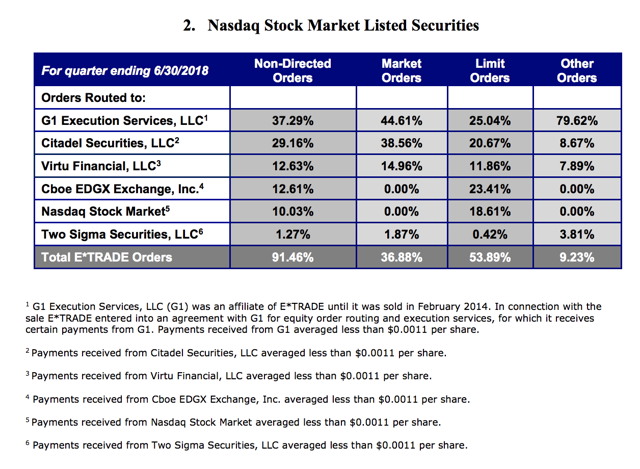
Robinhood is marketed as a commission-free stock trading product but makes a surprising percentage of their revenue directly from high-frequency trading firms. It appears from recent SEC filings that high-frequency trading firms are paying Robinhood over 10 times as much as they pay to other discount brokerages for the same volume. Robinhood needs to be more transparent about their business model.
May. 24, 2018

A new report by the FBI’s Internet Crime Complaint Center has shown that complaints about scams and fraud are rising now at a record high and have resulted in reported losses of up to $1.42 billion In a typical BEC scam, a criminal dupes a company’s finance department into carrying out an unauthorized transfer of funds. Importantly, the target must be fooled into believing that the request has come from an executive within the company or from an outside firm that does business with it, so the scam involves a measure of social engineering, email spoofing, or computer intrusion.
May. 21, 2018

In May 2017, one of the biggest facilitators of cybercrime, Scan4You, went offline after the two main suspects, were arrested in Latvia and extradited to the US by the Federal Bureau of Investigation (FBI). In May 2018, the case against the Scan4You’s operators concluded in a Virginia federal courtroom. Scan4You was set up in 2009 as an online service designed to help malware authors evade detection by security software.
May. 17, 2018
Most antivirus scanners play a classic cat and mouse game: They work by checking software against a frequently updated list of potential threats. In response, a whole industry has built up to help occlude and conceal hacking tools. That includes services that automate the process of checking all sorts of tools, from malware to malicious URLs, against dozens of defense scanners to see if they would get blocked.
May. 16, 2018
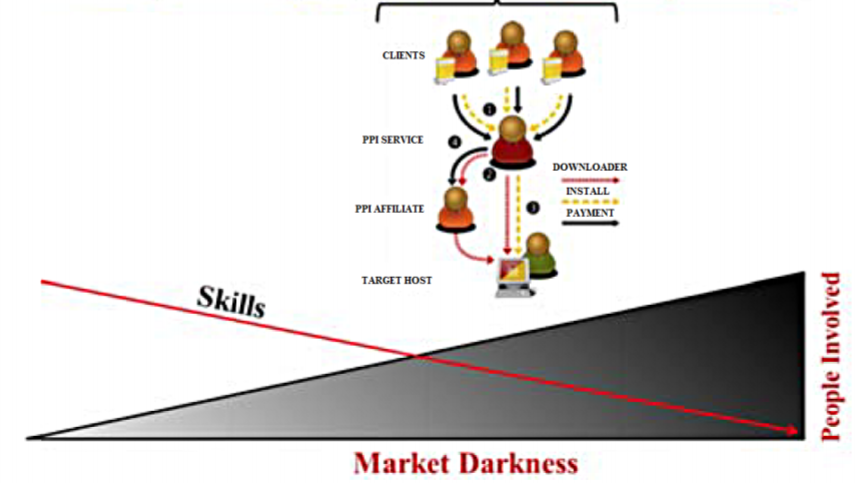
Botnets are shadowy networks of computers controlled by hidden actors and linked to everything thatâs bad on the web. They have been implicated in distributed denial-of-service attacks, spamming campaigns, click fraud, and bank fraud, to name just a few of the nastiest flavors of cybercrime. Clearly somebody, somewhere is making a fortune masterminding this kind of criminal activity.
Today we get an answer of sorts thank to the work of C.G.J. Putman at the University of Twente in the Netherlands and a couple of colleagues. âIt comes as no surprise that the primary motive for the use of botnets is for economic gain,â they say as they map out the costs and revenue streams. All that leads to a rough estimate of the cost of setting up a botnet on a national or international scale.
May. 10, 2018

Nigerian business email compromise scams are growing more dangerous and sophisticated as cybercriminals add new tools and techniques to their arsenal such as remote access trojans (RATs) and advanced information stealers, researchers found. Palo Alto Networks’ Unit 42 said in a report released Tuesday about Nigerian cybercrime that they found Nigerian business email compromise (BEC) linked incidents have shot up 45 percent in 2017 compared to the year prior, representing 17,600 attacks per month. But even beyond soaring cybercriminal incidents, criminals are becoming less of a pesky threat, such as Nigerian Prince 419-style email scams, and more dangerous.
Apr. 19, 2018

T-Mobile admitted its deceptive scheme to the commission and received a $40 million fine. Given that the trick affected “hundreds of millions” of people in rural areas and perhaps billions of calls, the fine represents just a few cents per call. Even worse: Consumers will not see a cent for this deception that.
According to Ars Technica,FCC Commissioner Mignon Clyburn–who just stepped down from her post–was deeply critical of the fine, calling it absurdly low. The compliance plan contained in the FCC ruling, she says, “does not contain any concessions that would explain such a massive discount.” With Trump-appointed Ajit Pai in charge of the FCC, the treatment of telecomm companies probably won’t change any time soon.