May. 8, 2018
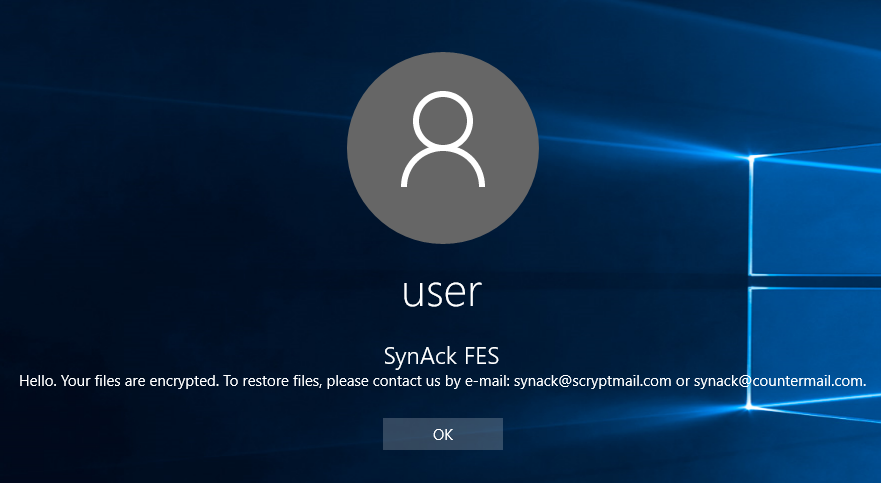
The Process Doppelgänging technique was first presented in December 2017 at the BlackHat conference. Since the presentation several threat actors have started using this sophisticated technique in an attempt to bypass modern security solutions. In April 2018, we spotted the first ransomware employing this bypass technique – SynAck ransomware.
It should be noted that SynAck is not new – it has been known since at least September 2017 – but a recently discovered sample caught our attention after it was found to be using Process Doppelgänging. Here we present the results of our investigation of this new SynAck variant.
Apr. 19, 2018

An arbitrary file write vulnerability is where a user can create or modify a file in a location they could not normally access. This might be due to a privileged service incorrectly sanitizing information passed by the user or due to a symbolic link planting attack where the user can write a link into a location which is subsequently used by the privileged service. The ideal vulnerability is one where the attacking user not only controls the location of the file being written but also the entire contents.
Mar. 29, 2018

While doing threat research, teams need a lot of tools and systems to aid their hunting efforts – from systems storing Passive DNS data and automated malware classification to systems allowing researchers to pattern-match a large volume of data in a relatively short period of time. These tools are extremely useful when working on APT campaigns where research is very agile and spans multiple months. One of the most frequently used tools for hunting new variants of malware is called YARA and was developed by Victor Manuel Alvarez while working for VirusTotal, now part of Alphabet.
Mar. 28, 2018

For those looking to learn about and share malware samples, a site called VirusBay may be what you are looking for. VirusBay’s goal is to make malware analysis more social by providing a place for researchers to upload samples, request samples, and discuss them with other researchers.
Source: bleepingcomputer.com
Mar. 13, 2018
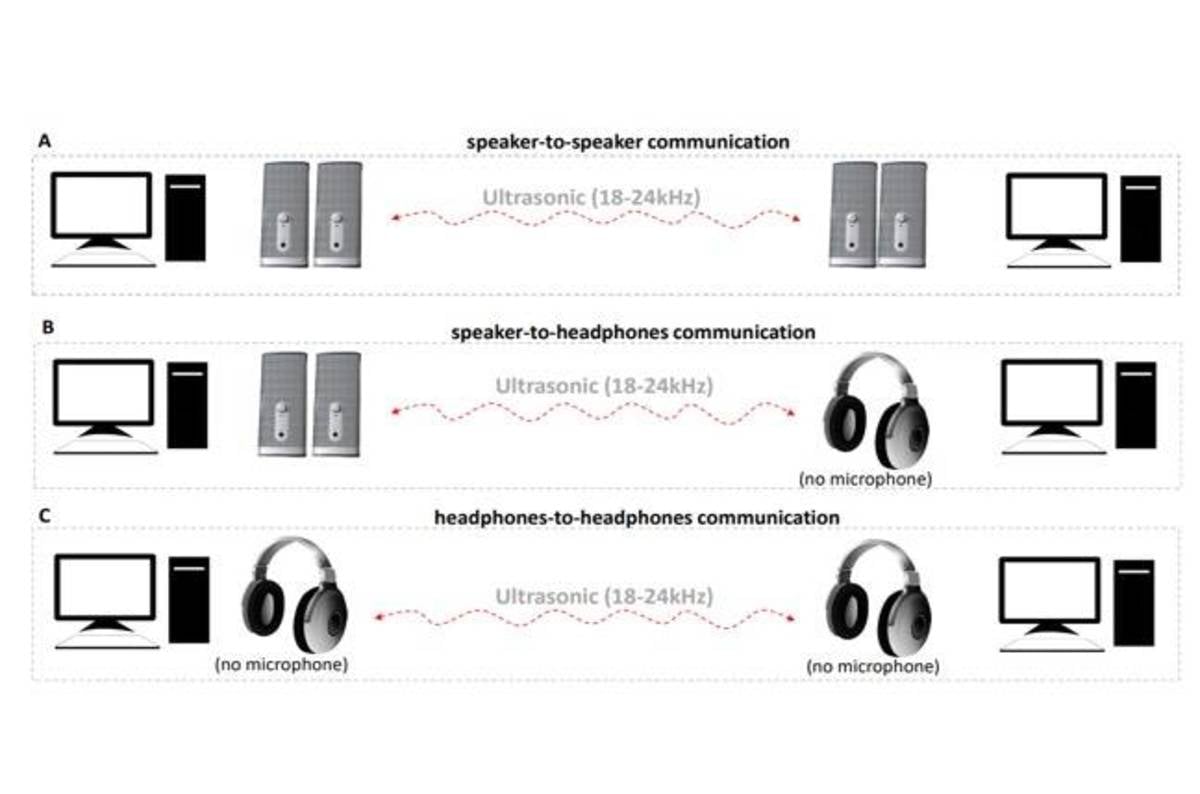
In an academic paper published on Friday through preprint service ArXiv, researchers from Israel’s Ben-Gurion University of the Negev describe a novel data exfiltration technique that allows the transmission and reception of data – in the form of inaudible ultrasonic sound waves – between two computers in the same room without microphones.
Source: co.uk
Mar. 13, 2018

The team of security researchers—who last month demonstrated how attackers could steal data from air-gapped computers protected inside a Faraday cage—are back with its new research showing how two (or more) air-gapped PCs placed in the same room can covertly exchange data via ultrasonic waves. Air-gapped computers are believed to be the most secure setup wherein the systems remain isolated from the Internet and local networks, requiring physical access to access data via a USB flash drive or other removable media. Dubbed MOSQUITO, the new technique, discovered by a team of researchers at Israel’s Ben Gurion University, works by reversing connected speakers (passive speakers, headphones, or earphones) into microphones by exploiting a specific audio chip feature.
Mar. 12, 2018

In November 2017, Recorded Future published research examining the publication speed for China’s National Vulnerability Database (CNNVD). While conducting that research, we discovered that China had a process for evaluating whether high-threat vulnerabilities had operational utility in intelligence operations before publishing them to the CNNVD. In revisiting that analysis, we discovered that CNNVD had altered their initial vulnerability publication dates in what we assess is an attempt to cover up that evaluation process.
Mar. 2, 2018

FinFisher is such a complex piece of malware that, like other researchers, we had to devise special methods to crack it. We needed to do this to understand the techniques FinFisher uses to compromise and persist on a machine, and to validate the effectiveness of Office 365 ATP detonation sandbox, Windows Defender Advanced Threat Protection (Windows Defender ATP) generic detections, and other Microsoft security solutions.