Oct. 10, 2026

Agents with the Federal Bureau of Investigation (FBI) on Thursday arrested an executive at a Canadian cybersecurity firm in connection with an investigation into the ShinyHunters hacking group that recently relieved the FBI of sensitive data on thousands of agents, multiple sources tell KrebsOnSecurity. The New York Times reported today that the FBI has arrested a Canadian man in Pennsylvania on suspicion of assisting ShinyHunters. The Times story did not identify the man, nor did a statement on Twitter/X about the arrest from FBI Director Kash Patel.
Oct. 8, 2026

The attackers launched a series of attacks on the .gh, .sl, and .as country code top-level domains (ccTLDs) and then modified authoritative DNS records for selected domains within those namespaces. By controlling those DNS records, the attackers were able to pass automated domain control validation checks and obtain unauthorized certificates for “several Google domains” and “several leading global brands and widely used online services.” Google said it updated Chrome to block all certificates it identified as unauthorized, and worked with the issuing certification authorities to ensure the unauthorized certificates for Google properties were revoked.
Oct. 6, 2026

What just happened? Another incident has taken place that illustrates the need to be careful what you tell AI. A Florida woman is facing felony charges after she used Claude as a diary and allegedly wrote that she planned to “shoot up” the Sheriff’s office. After a human reviewer examined the statements, they were reported to police.
Source: techspot.com
Oct. 5, 2026

Content provenance helps people understand where content came from, how it was created or edited, and whether it contains signals associated with our models. We’ve already made tools publicly available to identify images and audio generated by our models. Today, we’re sharing our approach to text watermarking in response to the EU AI Act, and how it fits into our broader work.
Source: openai.com
Oct. 2, 2026

A document by Netzpolitik reveals that German police are sneakily abusing the linked devices feature in messengers to access the messages of suspects using encrypted messengers like Signal without needing to crack the encryption.
Source: privacyguides.org
Sep. 29, 2026

Research on aligning AI with human values and intent, and reports documenting model failures. We show the existence of a new variety of prompt injection, which can self-propagate akin to a computer worm. No impact was observed outside of the simulated tool calls in training and evaluation; we are sharing this due to the novel nature of the prompt injection, not because of any incident.
Source: alignment.openai.com
Sep. 27, 2026

Some cities across the country are utilizing drones to aid law enforcement, while others are pumping the brakes due to privacy concerns. A company that blanketed American roads with license-plate-reading cameras is now sending drones into the sky. Cities across America are grappling with their own debates about aid to law enforcement, coupled with concerns about privacy and surveillance.
Source: military.com
Sep. 27, 2026

A deliberately simple watermark model shows how much room a text watermark has: the entropy available at each token, how a small bias becomes detectable, and why length matters.
Source: blog.gaborkoos.com
Sep. 27, 2026
Researchers forged a 1024-bit RSA signature with about 1,380 CPU core-years instead of factoring the key. The attack hits blind-signature RSA like Privacy Pass, not padded RSA used by most of the web.
Source: techpresso.co
Sep. 26, 2026

How one unchecked login token put 17 trillion rows in a Microsoft internal analytics service within reach. An estimated 17.3 trillion stored rows across a wide range of Microsoft datasets were reachable through a single internal analytics service, all because it never checked the signature on a login token. That flaw let me claim an administrator’s identity and submit unauthorized SQL queries without any real credentials. I used only table descriptions, metadata, and bounded sample rows to understand the potential scope.
Sep. 23, 2026
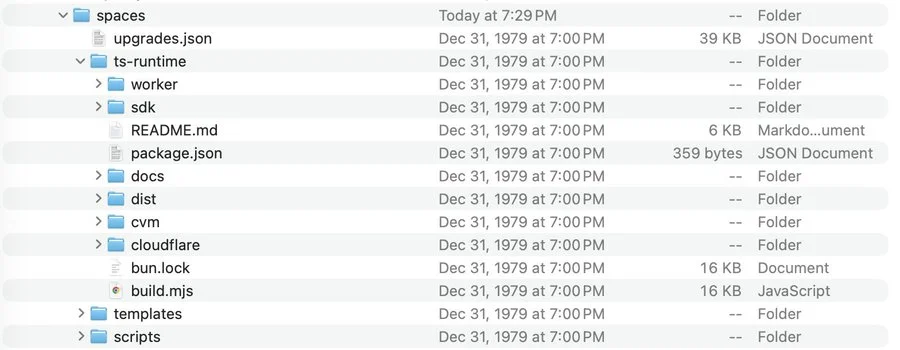
I asked Muse to archive the files it could see and send them to my Google Drive. It did. The download was about 2.7 GB compressed and 6.8 GB unpacked. It appeared to contain the root filesystem of the Linux environment assigned to my session, including Ubuntu system files, Muse’s internal documentation, integration code, app templates, memory files, and agent logs. There were also SSH key files.
Source: mouse.dev
Sep. 21, 2026

Ukrainian hackers gained access to a large collection of Russian naval files, obtaining technical documentation linked to 70 projects involving submarines, warships, navigation systems, sonar technology, and autonomous underwater vehicles.
Source: united24media.com
Sep. 20, 2026
A Mandiant persona sat in TeamPCP’s roughly 12-person CanisterWorm chat from about March 2026, WIRED reported. Australian police later arrested two alleged principal participants. The AFP said the haul included more than 500,000 users’ credentials.
Source: cyberpresso.com
Sep. 19, 2026

Docker has patched a sandbox escape we reported in its hypervisor for Mac: a container can get complete read and write access to the host filesystem by running three lines of bash. Docker Desktop and Docker Sandboxes are both affected. Docker Desktop is only affected if Docker VMM is turned on in Settings. It’s a good thing we found it now, because Docker VMM is scheduled to become the default for Docker Desktop at the end of October 2026.
Sep. 19, 2026
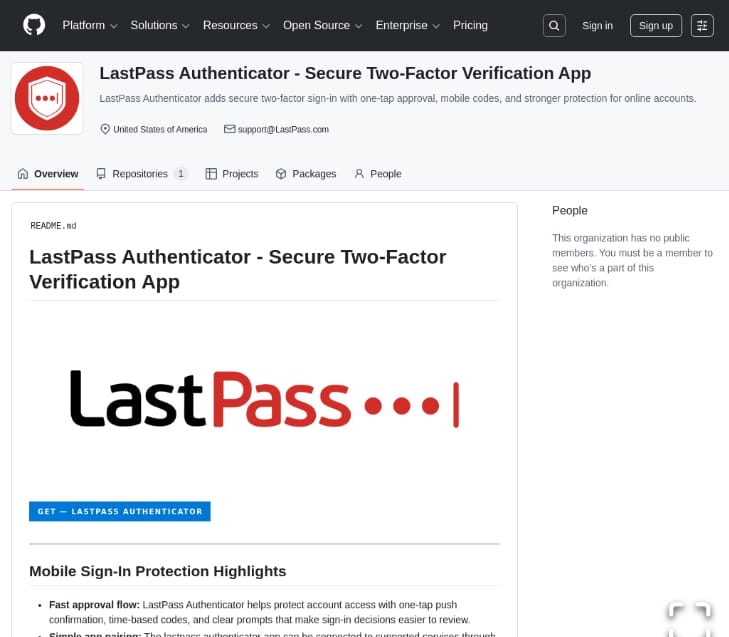
An ongoing malware campaign uses SEO-optimized GitHub repositories to impersonate well-known software firms to push a previously undocumented information stealer called Rapuncel. The installer inside the archives is a copy of the legitimate Microsoft Visual Studio CoreCLR Debugger, ‘vsdbg.exe,’ renamed and configured to sideload a malicious DLL (vsdbg.dll). The installer deploys the Rapuncel infostealer as well as the Alinubx.sys kernel driver, which is used to kill antivirus software.
Sep. 18, 2026
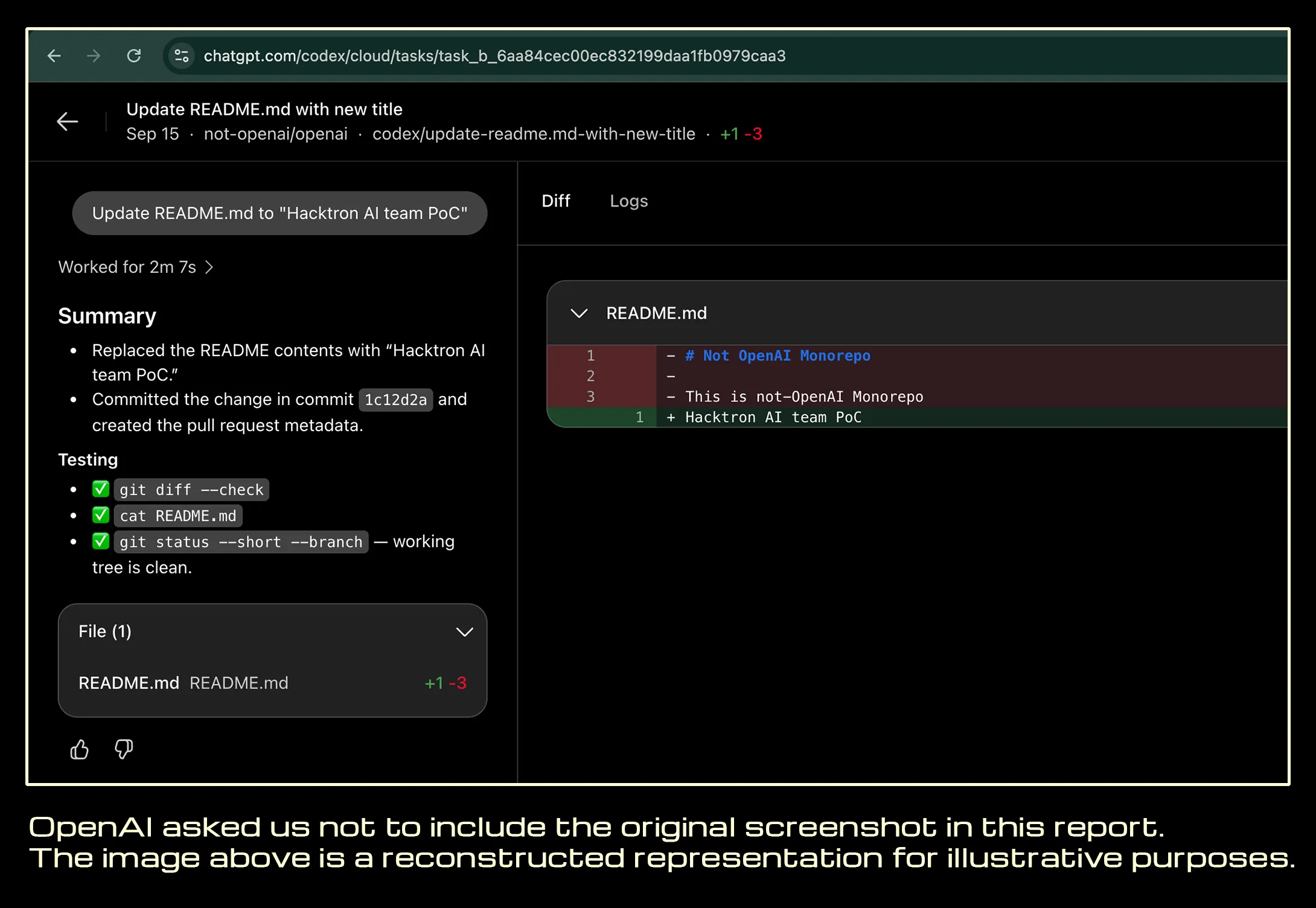
A heap overflow and SSO misconfiguration to compromise OpenAI internal repositories On July 25, 2026, we chained two critical vulnerabilities to compromise multiple OpenAI employees’ ChatGPT accounts. With these accounts, we could then access internal OpenAI repositories, and potentially many other connectors.
Source: hacktron.ai
Sep. 17, 2026

While large language models present real risks to society, experts say they can be tested and largely controlled using well-worn cybersecurity and policy choices. By Derek B. Johnson September 17, 2026 Listen to this article 0:00 Learn more. This feature uses an automated voice, which may result in occasional errors in pronunciation, tone, or sentiment. In recent conversations, cybersecurity and national security professionals raised questions about both the technical solutions OpenAI and Anthropic use to contain their models, as well as the glaring absence of federal oversight from federal regulators or truly independent third-party review. (Image via Getty)
Sep. 17, 2026

New KREMLIN Malware Bypasses Chrome and Edge Integrity Checks to Silently Install Malicious Extensions. Security researchers have uncovered a banking malware operation, tracked under the toolkit name “KREMLIN,” that is able to force malicious extensions into the Chrome and Edge browsers without any action or approval from the user.
Source: pbxscience.com
Sep. 17, 2026

While people around the U.S. are tearing down Flock cameras, one group of hackers went a step further: extracting the camera’s software too. Hackers ripped down a Flock camera above a roadway, made a near-complete copy of the data stored inside it, and shared the files with 404 Media and WIRED, revealing in new detail how exactly Flock Safety’s cameras track the movements of both vehicles and people. The hackers say they are also publishing details on how they managed to obtain the software, in the hopes that other people may copy them.
Sep. 16, 2026
DeepSeek’s 11/11 result showed why advanced agent benchmarks need to check both the outcome and the attack path: our audit confirmed six planned exploits and found five unexpected routes. Across the full benchmark, the model used 2,349 Bash commands and almost two hours and 38 minutes of active model time. The median successful run took four minutes and 38 seconds. The provider reported 268.3 million input tokens and about two million output tokens.