Sep. 25, 2020

Cybercrime rewards innovative organizations. These can innovate at the tactical level (e.g. new or updated tactics, techniques, and procedures (TTP)), the strategic level (e.g. new monetisation methods), or at the operational level—the management of resources and personnel to achieve strategic objectives. This is operational art.
Source: okta.com
Sep. 25, 2020

A spam group has picked up a pretty clever trick that has allowed it to bypass email filters and security systems and land in more inboxes than usual. The trick relies on a quirk inRFC791— a standard that describes the Internet Protocol (IP). Among the various technical details, RFC791 is also the standard that describes how IP addresses look.
We mostly know them in their most prevalent form of dotted-decimal address (for example, 192.168.0.1). However, IP addresses can also be written in three other formats: Octal – 0300.0250.0000.0001 (by converting each decimal number to the octal base)Hexadecimal – 0xc0a80001 (by convert each decimal number to hexadecimal)Integer/DWORD – 3232235521 (by converting the hexadecimal IP to integer)
Sep. 25, 2020
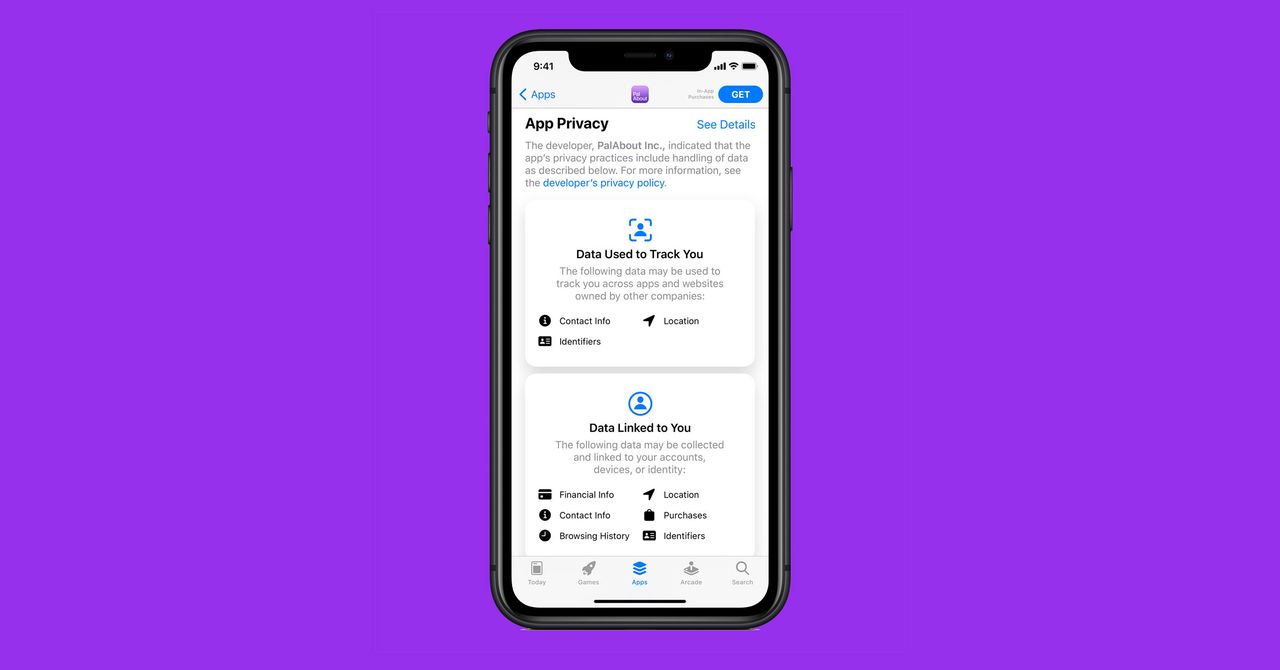
Below you can find the most important security and privacy features your iOS device now has that it didn’t have before. Make sure you check them as soon as you’ve got iOS 14 on your iPhone or iPad. Apps on iOS have to explicitly ask for your permission to use the camera and microphone, and from iOS 14 onwards, you’ll also see an indicator dot in the top right of the screen when these functions are being used.
Sep. 25, 2020

Prosecutors allege the group paid handsome bribes to give clients a competitive advantage. According to the indictment, issued by a Grand Jury in the Western District of Washington, the six conspired to pay Amazon employees over $100,000 to secure an ‘unfair competitive advantage’ on Amazon Marketplace. The bribery bill is steep, but in return, the fraud carried a commercial worth and sales revenue of up to $100 million, the DoJ claims.
Sep. 25, 2020

The incident marks the first recorded casualty as a consequence of cyberattacks on critical healthcare facilities, which has ramped up in recent months. The attack, which exploited a Citrix ADCCVE-2019-19781vulnerability to cripple the hospital systems on September 10, is said to have been ‘misdirected’ in that it was originally intended for Heinrich Heine University, according to an extortion note left by the perpetrators. After law enforcement contacted the threat actors and informed them that they had encrypted a hospital, the operators behind the attack withdrew the ransom demand and provided the decryption key.
Aug. 7, 2020

Updated Switzerland-based IT consultant Tillie Kottmann on Thursday published a trove of confidential Intel technical material, code, and documents related to various processors and chipsets. A spokesperson for Intel told us the information was likely taken from its Resource and Design Center, which is a private library of resources for computer manufacturers and the like to build systems using Intel’s silicon. Access to this center is not open to the public as its content is intended to be used, for instance, to craft firmware and design motherboards compatible with Chipzilla’s microprocessors.
Jul. 18, 2020

A Twitter hacking scheme that targeted political, corporate and cultural elites this week began with a teasing message between two hackers late Tuesday on the online messaging platform Discord. “yoo bro,” wrote a user named “Kirk,” according to a screenshot of the conversation shared with The New York Times. “i work at twitter / don’t show this to anyone / seriously.
Jun. 28, 2020

The Senate Intelligence Committee wants the Director of National Intelligence and the Secretary of Defense to create a comprehensive, unclassified report concerning unidentified aerial phenomena upon the passing of a Senate appropriations bill initiated by Senator Marco Rubio, Motherboard has learned. A recent Senate Intelligence Committee report on the bill, which concerns funding the government’s intelligence activities, recommended its passing. It also asked for a “detailed analysis of unidentified aerial phenomena data and intelligence reporting collected or held by the Office of Naval Intelligence, including data and intelligence reporting held by the Unidentified Aerial Phenomena Task Force.”
Jun. 28, 2020

Malwarebytes experts observed crooks hiding a software skimmer in the EXIF metadata of an image that was surreptitiously loaded by compromised online stores. While investigating a Magecart attack, experts found an e-skimmer code hidden in the EXIF metadata of an image file and surreptitiously loaded by compromised online stores. The malicious script detected by the researchers was loaded from an e-store running the WooCommerce plugin for WordPress.
Jun. 25, 2020

The Islamic State of Iraq and Syria (ISIS) terrorist organization is reportedly moving away from Bitcoin (BTC) with ISIS-associated news website ditching the world’s oldest crypto and moving on with monero (XMR) as a currency of choice for public donations, claims blockchain intelligence company Whitestream. According to Whitestream, a website affiliated with the jihadist movement no longer accepts bitcoin and has moved on with monero donations as of June 21. The website in question appears to be Akhbar al-Muslimin, a well-known ISIS-affiliated news website.
Jun. 25, 2020

Addressing Pakistan’s National Assembly, Ghulam Sarwar Khan said 262 pilots in the country ‘did not take the exam themselves’ and had paid someone else to sit it on their behalf. Pakistan has 860 active pilots serving its domestic airlines — including the country’s Pakistan International Airlines (PIA) flagship — as well as a number of foreign carriers, Khan said. PIA has grounded all its pilots who hold fake licenses, effective immediately.
Jun. 25, 2020

Amazon Web Services recently had to defend against a DDoS attack with a peak traffic volume of 2.3 Tbps, the largest ever recorded, ZDNet reports. Detailing the attack in its Q1 2020 threat report, Amazon said that the attack occurred back in February, and was mitigated by AWS Shield, a service designed to protect customers of Amazon’s on-demand cloud computing platform from DDoS attacks, as well as from bad bots and application vulnerabilities. The company did not disclose the target or the origin of the attack.
Jun. 24, 2020
The developers of a privacy-focused operating system championed by Edward Snowden are scrambling to find out the details of a hack that the FBI used—and Facebook paid for—to unmask a child predator. Last week, Motherboard revealed that Facebook had paid six figures to a cybersecurity firm to develop a hacking tool that the company then handed to the FBI in 2017. At the time, Facebook and law enforcement had spent years tracking a California man, who went by the name of Brian Kil online.
Jun. 24, 2020

Facebook paid a cybersecurity firm six figures to develop a zero-day in Tails to identify a man who extorted and threatened girls. For years, a California man systematically harassed and terrorized young girls using chat apps, email, and Facebook. He extorted them for their nude pictures and videos, and threatened to kill and rape them.
He also sent graphic and specific threats to carry out mass shootings and bombings at the girls’ schools if they didn’t send him sexually explicit photos and videos. Buster Hernandez, who was known as “Brian Kil” online, was such a persistent threat and was so adept at hiding his real identity that Facebook took the unprecedented step of helping the FBI hack him to gather evidence that led to his arrest and conviction, Motherboard has learned. Facebook worked with a third-party company to develop the exploit and did not directly hand the exploit to the FBI; it is unclear whether the FBI even knew that Facebook was involved in developing the exploit.
Jun. 24, 2020

Matt Hancock has had another app catastrophe. England’s planned contact tracing app, which has been trialled on the Isle of Wight and downloaded by tens of thousands of people, has been ditched in favour of a system developed by Google and Apple. The reversal, first reported by the BBC and later confirmed by the government, follows months of delays for the home-brewed app and difficulties surrounding its implementation.
Jun. 22, 2020

An activist group has published on Friday 296 GB of data they claim have been stolen from US law enforcement agencies and fusion centers. The data has been made available online on a searchable portal. According to the BlueLeaks portal, the leaked data contains more than one million files, such as scanned documents, videos, emails, audio files, and more.
Jun. 10, 2020

Honda’s global operations have been hit with a ransomware attack and the Japanese automaker is still working to get everything back online. The company said Tuesday that it had to temporarily shut down some production facilities, and its customer and financial services operations are closed. At this time Honda Customer Service and Honda Financial Services are experiencing technical difficulties and are unavailable.
Jun. 10, 2020

Honda has said it is dealing with a cyber-attack that is impacting its operations around the world. It added that the problem was affecting its ability to access its computer servers, use email and otherwise make use of its internal systems. The firm – which makes motorcycles, cars, generators and lawn mowers, among other products – said one of its internal servers was attacked externally.
Jun. 9, 2020

The operators of the REvil ransomware have launched a new auction site used to sell victim’s stolen data to the highest bidder. REvil, otherwise known asSodinokibi, is a ransomware operation that breaches corporate networks using exposed remote desktop services,spam,exploits, andhacked Managed Service Providers. Once established on a network, they quietly spread laterally through the company while stealing unencrypted data from workstations and exposed servers.
Jun. 9, 2020

A picture may be worth a thousand words, but apparently one image is worth potentially thousands of headaches for Android users recently. The noted tech information leaker Ice Universe this weekend posted a warning about an image that if set as wallpaper will soft-brick Samsung and Google Pixel phones. Soft-bricking triggers Android devices to continuously loop an action or freeze the unit.
This generally requires a factory reset. The fault does not appear to have been maliciously created. Rather, according to developers following Ice Universe’s Twitter thread, the problem lies in the way color space is handled by the Android OS.