May. 6, 2018

Flash is designed to last a decade or more of use. A lot of the gadgets that rely on it are not. Shady recyclers have spotted opportunity in that mismatch, stripping out used chips and selling them as new.
But engineers at the University of Alabama have come up with a straightforward electronic examination that can tell if a flash chip is new or recycled, even if that chip has only seen 5 percent or less of its life. And the technique is so straightforward that a smartphone app could run it on its own memory.
May. 6, 2018
Researchers said Chinese intelligence officers are behind almost a decade’s worth of network intrusions that use advanced malware to penetrate software and gaming companies in the US, Europe, Russia, and elsewhere. The hackers have struck as recently as March in a campaign that used phishing emails in an attempt to access corporate-sensitive Office 365 and Gmail accounts. In the process, they made serious operational security errors that revealed key information about their targets and possible location.
May. 6, 2018

On Friday, the Nuclear Regulatory Commission announced that Idaho State University may face an $8,500 fine after losing one gram of weapons-grade plutonium. Although this quarter-sized amount of plutonium is nowhere near enough to make a nuclear weapon, it is enough to make a dirty bomb that spreads radiation, according to the Associated Press.
Source: vice.com
May. 6, 2018

The company recently canceled the public sale piece of its ICO, the Wall Street Journal reported this week, after it raised $1.7 billion from private sale investors, according to SEC filings. But the issues date back further.
Source: techcrunch.com
May. 6, 2018

The US Food and Drug Administration (FDA) last month approved a firmware patch for pacemakers made by Abbott’s (formerly St Jude Medical) that are vulnerable to cybersecurity attacks and which are at risk of sudden battery loss.
Source: sophos.com
May. 6, 2018

This attack relies on the file:// protocol to load and execute a remote script from a samba (SMB) share. This is noteworthy because typically the attachment is used as a downloader, but instead here we see one additional step that pushes this function one degree further thanks to the .url shortcut.
Source: malwarebytes.com
May. 4, 2018

According to thebroadcaster ABC, the data were supposed to have been destroyed when a sub-contractor after the dismantled a data centre. The sub-contractor did not provide the bank the documentation to confirm this the disruption of the magnetic data tapes, anyway the bank tried to downplay the situation confirming that the records don’t include passwords, PINs or other financial or sensitive information.
May. 4, 2018

Once the malware has been installed, it sets about mining for Monero and hooking up with a crypto-wallet and mining pool; it also connects with its C2 server for updates, and configures itself to infect other machines on the network. Meanwhile, a short VisualBasic script is used to deploy the malware to compromised Apache Struts servers, and it moves laterally by replicating itself like a worm. MassScan meanwhile passes a list of both private and public IP ranges to scan during execution, to find fresh server targets out on the web that it can break into with the SQLck brute-force tool.
May. 4, 2018
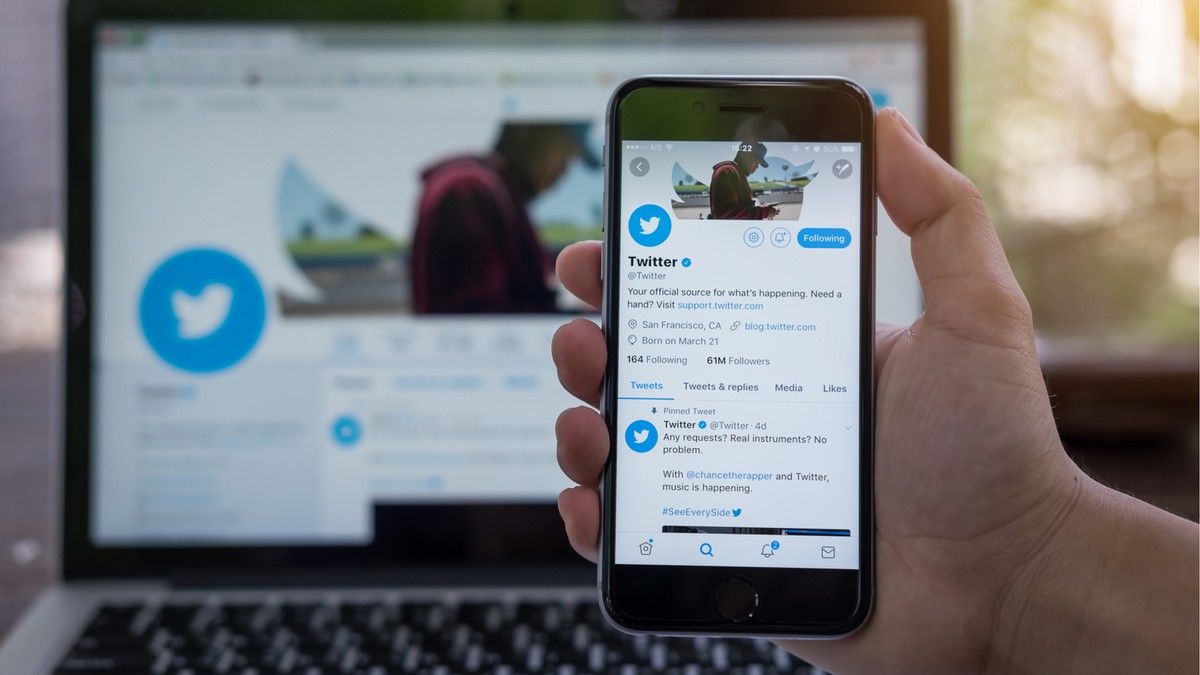
If you use the same password for multiple services (please don’t do that), or have your Twitter account connected to other login credentials online, you should change these passwords immediately. The logs that exposed users’ passwords were internal, but if anyone could see them at all the safest thing to do is change them.
Source: vice.com
May. 4, 2018

The artifacts were smuggled into the United States beginning in 2010, near the end of the Iraq War—falsely labeled as tile samples, and eventually intercepted by Customs and Border Protection. Hobby Lobby agreed to surrender them last year, forfeiting an additional $3 million, after a civil complaint was filed in the US District Court for the Eastern District of New York.
May. 4, 2018

The bug (CVE-2018-0264) exists in the platform’s Recording Player for Advanced Recording Format (ARF), which allows users to play back WebEx meeting recordings. The player is installed automatically when a user accesses a recording file hosted on a WebEx server. Cisco WebEx Business Suite meeting sites, Cisco WebEx Meetings sites, the Cisco WebEx Meetings Server and the Cisco WebEx ARF Player itself are all affected.
May. 4, 2018

You would think that after decades of analyzing and fighting email spam, there’d be a fix by now for the internet’s oldest hustle—the Nigerian Prince scam. There’s generally more awareness that a West African noble demanding $1,000 in order to send you millions is a scam, but the underlying logic of these “pay a little, get a lot” schemes, also known as 419 fraud, still ensnares a ton of people. In fact, groups of fraudsters in Nigeria continue to make millions off of these classic cons.
May. 4, 2018

Because we live in a meme-saturated hellworld, meat and cold cut company Oscar Mayer is running a promotion called “Bacoin,” a cryptocurrency-inspired redemption program designed to get people to promote bacon on social media. This is lame and I’m sorry to have made you read that, but dear reader, something has happened that makes this branding play improbably, unbelievably, sort of interesting.
May. 4, 2018

ZooPark is a cyberespionage operation that has been focusing on Middle Eastern targets since at least June 2015. The threat actors behind the operation infect Android devices using several generations of malware, with the attackers including new features in each iteration. We label them from v1-v4, with v4 being the most recent version deployed in 2017.
From the technical point of view, the evolution of ZooPark has shown notable progress: from the very basic first and second versions, the commercial spyware fork in its third version and then to the complex spyware that is version 4. This last step is especially interesting, showing a big leap from straightforward code functionality to highly sophisticated malware.
May. 4, 2018
The proof of concept attack the researchers created to demonstrate their technique takes about two minutes, from a malicious site loading their javascript in the browser to running code on the victim’s phone. It can only run that code, however, within the privileges of the browser. That means it can potentially steal credentials or spy on browsing habits, but it can’t gain deeper access without a hacker exploiting other bugs in the phone’s software.
May. 4, 2018

Kitty, a Monero cryptocurrency which utilizes open-source mining software for browsers, executes a bash script, kdrupal.php, which is written to an infected server disc. This then establishes a backdoor into an infected system separate from the Drupal vulnerability.
Source: zdnet.com
May. 4, 2018

A little over a year ago, the three Lightning Network implementation teams joined forces to work on a common specification for the protocol stack. Now that both that specification and our three implementations are becoming stable and usable, it is time to look forward: to further improve the protocol, to add new features, to simplify, and to fix downsides.
Source: blockstream.com
May. 3, 2018

DNA sequencing is cheap and accessible; companies with large databases of genetic material have to think about how (and if) they’ll protect it; and yes, the FBI is interested. Much of the panel focused on two news items:
Source: vice.com
May. 3, 2018

The vulnerability was discovered inthe Volkswagen Golf GTE and an Audi3 Sportback e-tron, which were both manufactured in 2015. Computest researchers Daan Keuper and Thijs Alkemade, who discovered the flaw, said that under certain conditions the IVI vulnerability could enableattackers to commandeer the on-board microphone to listen in on the conversations of the driver, turn the microphone on and off, and access the system’s complete address book and the conversation history. There is also a possibility of hackers tracking the car through the navigation system at any given time, they said.
May. 3, 2018
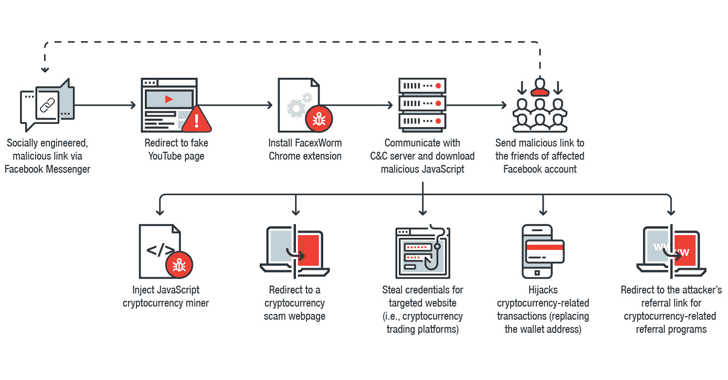
To spread itself further like a worm, the malware requests OAuth access token for the Facebook account of the victim, using which it then automatically obtains the victim’s friend list and sends that malicious, fake YouTube video link to them as well.
Source: thehackernews.com