May. 17, 2018

Such a vast expansion of the tech now means that evading such scans will be even more difficult. For years, Ars has been reporting on automated license plate readers (ALPRs, or simply LPRs)—a specialized camera often mounted on police cars that can scan at speeds of up to 60 plates per second. Those scans are compared against what law enforcement usually dubs a ‘hot list’ before alerting the officer to the presence of a potentially wanted or stolen vehicle.
May. 15, 2018

Four of the largest cell giants in the US are selling your real-time location data to a company that you’ve probably never heard about before. In case you missed it, a senator last week sent a letter demanding the Federal Communications Commission (FCC) investigate why Securus, a prison technology company, can track any phone ‘within seconds’ by using data obtained from the country’s largest cell giants, including AT&T, Verizon, T-Mobile, and Sprint, through an intermediary, LocationSmart. The story blew up because a former police sheriff snooped on phone location data without a warrant, according The New York Times.
May. 14, 2018

THE ACCC is investigating accusations Google is using as much as $580 million worth of Australians’ phone plan data annually to secretly track their movements. Australian Competition and Consumer Commission chairman Rod Sims said he was briefed recently by US experts who had intercepted, copied and decrypted messages sent back to Google from mobiles running on the company’s Android operating system. The experts, from computer and software corporation Oracle, claim Google is draining roughly one gigabyte of mobile data monthly from Android phone users’ accounts as it snoops in the background, collecting information to help advertisers.
May. 12, 2018

Police officials in Baltimore are trying to deflect controversy over an aerial mass-surveillance program exposed earlier this week, in which a private company quietly keeps watch over a 32-mile radius of the city by flying planes overhead for as many as 10 hours a day. Smith justified the program by alluding to two cases from the 1980s, in which the Supreme Court ruled that police don’t need a warrant to observe a suspect from above using helicopters. But those cases notably involved surveillance of a single person, not half an entire city of 621,000 people.
May. 12, 2018

On Thursday, the New York Times published a blockbuster piece revealing how US law enforcement have access to a system that can geo-locate nearly any phone in the country without an officer necessarily having a court order. Now, Motherboard has obtained the letters that Senator Ron Wyden sent to the Federal Communications Commission (FCC) and telecommunications companies demanding answers on the controversial surveillance system. According to the New York Times report, a former sheriff of Mississippi County, Mo., used an obscure service called Securus to surveill targets’ cell phones, including a judge and other law enforcement officials.
May. 12, 2018

A bipartisan group of House lawmakers have introduced legislation that would block the federal government from requiring technology companies to design devices with so-called back doors to allow law enforcement to access them. The bill represents the latest effort by lawmakers in Congress to wade into the battle between federal law enforcement officials and tech companies over encryption, which reached a boiling point in 2015 as the FBI tussled with Apple over a locked iPhone linked to the San Bernardino terror attack case.
May. 9, 2018
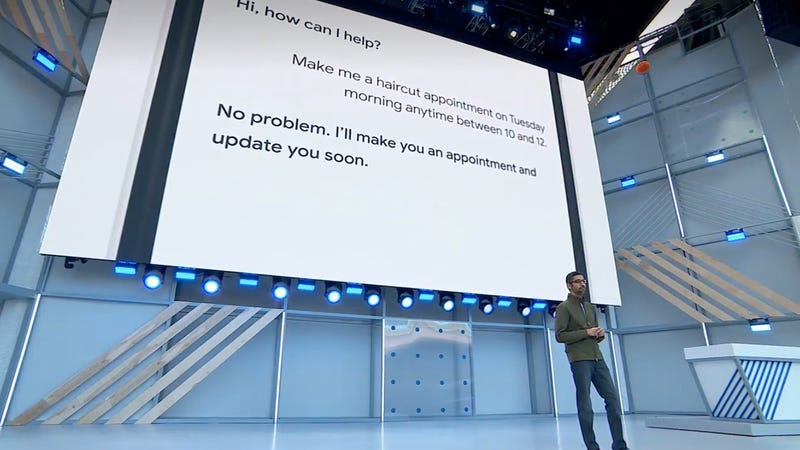
The near future terror of this project has to do with how it could be used to further erode your privacy and security. Google has access to a lot of your information. It knows everything you browse on Chrome, and places you go on Google Maps.
If you’ve got an Android device it knows who you call. If you use Gmail it knows how regularly you skip chain emails from your mom. Giving an AI that pretends to be human access to all that information should terrify you.
May. 8, 2018
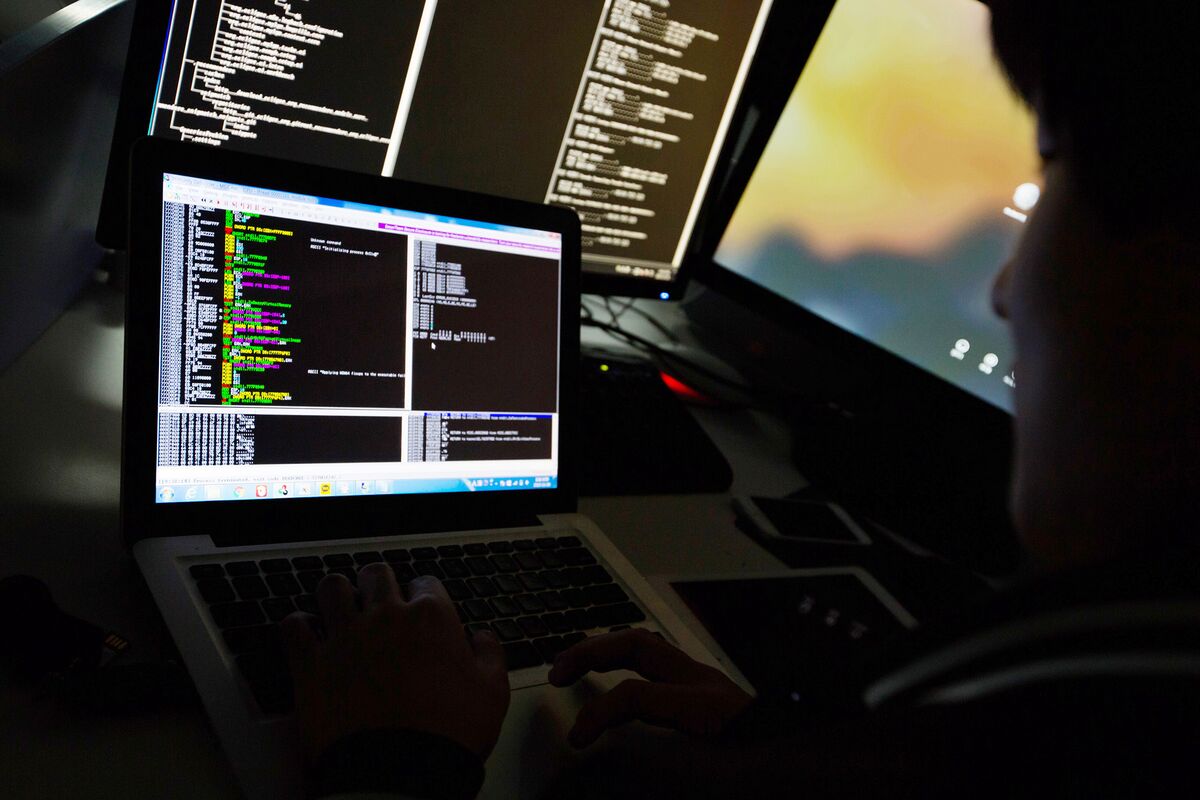
Its website, CAPrivacy.org, is pretty much what you’d expect. There are creepy fictional videos portraying people’s birth date, physical location, and potentially embarrassing info about their online purchases (hair loss prevention shampoo) and the apps they use (online poker). Below the videos, there’s a motivating message: “It’s your personal information.
Take back control!” There is one surprising aspect, though. Each time someone visits, software gleans what information it can about her, then sends that information to Facebook, including her IP address, what web pages she was on before and after visiting, and so on.
May. 6, 2018

The company suggested a number of other ways it may use the technology, including to serve more personalized offers and product tie-ins while attendees move around the venue. It would also allow for “development of deeper customer relationships” between fans, artists, venues, and teams. Moreover, Ticketmaster touts the technology as boosting safety and security, as it allows venues to know exactly who is in attendance — though an e-ticket tied to an individual’s mobile device would presumably offer a similar benefit.
May. 3, 2018

DNA sequencing is cheap and accessible; companies with large databases of genetic material have to think about how (and if) they’ll protect it; and yes, the FBI is interested. Much of the panel focused on two news items:
Source: vice.com
May. 3, 2018

At a factory in Hangzhou, China, production line workers are allegedly being outfitted with brain-reading hats and helmets. They read workers’ emotions and use artificial intelligence algorithms to “detect emotional spikes such as depression, anxiety or rage,” according to the South China Morning Post.
Source: vice.com
Apr. 29, 2018

The detectives then attempted to use the fingers on Phillip’s body to unlock his own smartphone, which had been recovered from the scene. Their efforts were not successful.
Source: arstechnica.com
Apr. 27, 2018

More than 40 civil rights, technology, media and privacy groups have voiced their concerns about the police body cameras in a letter to the AI Ethics Board, which includes groups like the American Civil Liberties Union, and the NAACP.
Source: fortune.com
Apr. 24, 2018
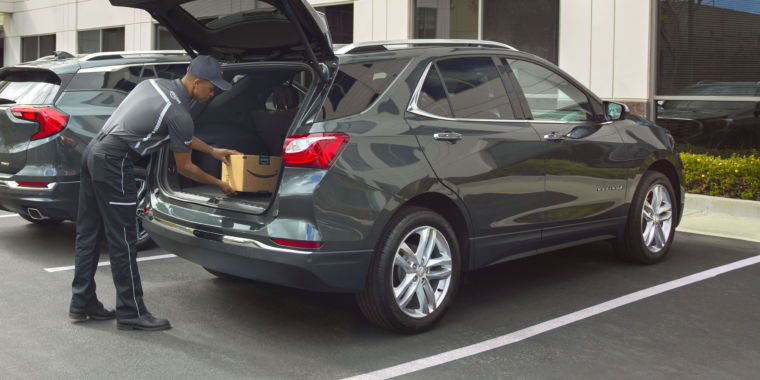
Amazon added a new delivery location to the ever-growing number of spots it can leave your packages: inside your car. The company announced an expansion of its Amazon Key in-home delivery service that now lets Prime members get packages deposited in their cars at no extra cost. The service is available today in 37 cities across the country for Prime members with eligible vehicles and active subscriptions to connected car services.
Apr. 19, 2018

Peter Thiel’s data-mining company is using War on Terror tools to track American citizens. The scary thing? Palantir is desperate for new customers.
Source: bloomberg.com
Apr. 18, 2018
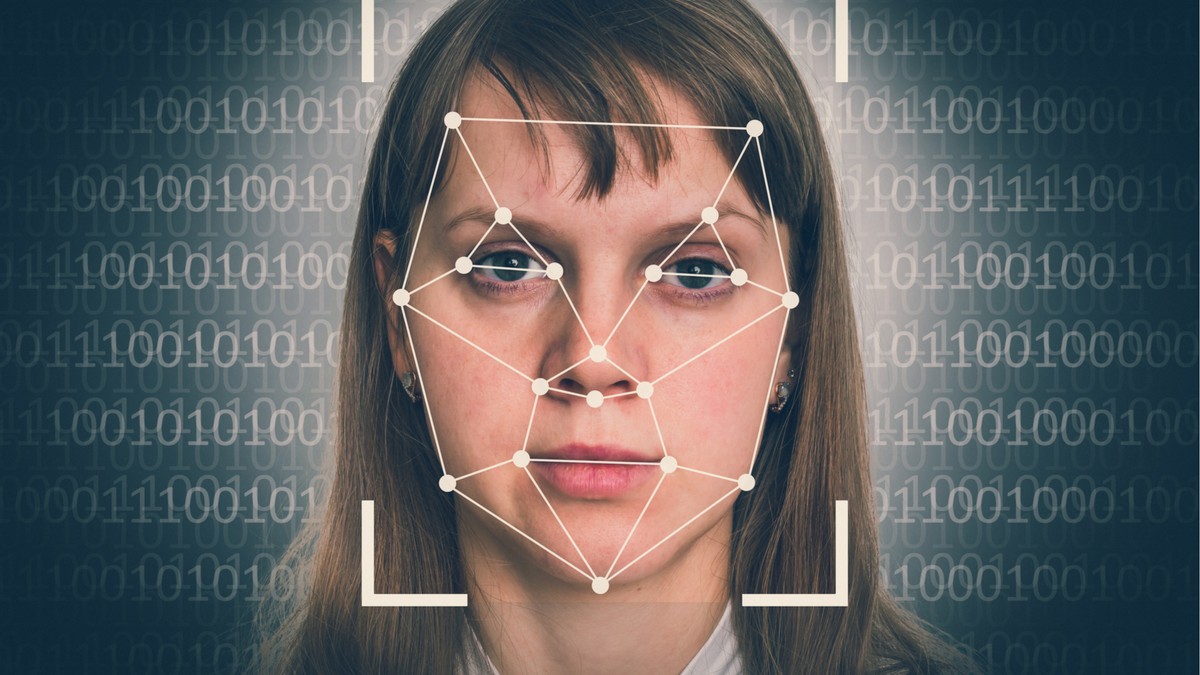
As Reuters reports, the lawsuit alleges that Facebook improperly collected and stored users’ biometric data. It was originally filed in 2015 by Facebook users in Illinois, which passed the Biometric Information Privacy Act (BIPA) in 2008. The law regulates the collection and storage of biometric data, and requires that a company receive an individual’s consent before it obtains their information.
Apr. 17, 2018

Singapore last year announced that it wants to convert every single lamp post in the country – there are about 110,000 in the island state – into an interconnected network of wireless sensors.
Source: sophos.com
Apr. 12, 2018

Ad serving firm Flashtalking analyzed 20 advertisers worldwide throughout Q4 2017 and found that 64% of their tracking cookies were either blocked or deleted by web browsers. According to the research, rejection rates on mobile devices were particularly high—75% of mobile cookies were rejected, compared with 41% on desktop.
Source: emarketer.com
Apr. 9, 2018

Encrypting DNS traffic between your device and a ‘privacy-focused’ provider can keep someone from spying on where your browser is pointed or using DNS attacks to send you somewhere else.
Source: arstechnica.com
Apr. 4, 2018

In Europe, an Internet user can force Google to hide search results that are inaccurate or just too personal. But Americans don’t have the same legal protections — even in the most extreme cases.
Source: npr.org