Mar. 19, 2018

The U.S. executive branchissued an executive order prohibiting the use or purchase of Venezuela’s Petro cryptocurrency, claiming the currency was issued unlawfully in an effort to circumvent U.S. sanctions against Venezuela, and in particular the President Nicolás Maduro’s regime.
Source: digitaltrends.com
Mar. 18, 2018

It’s a worrying development in the direction of isolationism and away from the benefits of competition in the spirit of improving security for all. It comes at a time when relations between the US and China strain under the weight of Huawei security concerns, which are not at all new, but are certainly coming to a head as American companies sever business ties with the firm.
Mar. 18, 2018

Twitter will ban advertisements for several kinds of cryptocurrency products and projects. The policy, according to Sky News, would go into effect in two weeks and would block ads for initial coin offerings, token sales, and cryptocurrency wallets. It could also encompass a ban on ads for cryptocurrency exchanges.
Source: fortune.com
Mar. 18, 2018

The SEC’s decision to aggressively police cryptocurrency offerings is particularly significant for the Ethereum community because many new cryptocurrency offerings are built on top of the Ethereum platform. People creating a new token on the Ethereum blockchain need to buy ether, the currency used to pay for Ethereum transactions. So if aggressive SEC enforcement ends the Initial Coin Offering (ICO) boom—which seems to be cooling anyway—it would remove a major factor that pushed ether’s value upward during 2017.
Mar. 18, 2018

Both attacks rely on using high-speed timing measurements to detect sensitive information, so somewhat counterintuitively, the patches had to decrease the speed of seemingly mundane computations. The first change was to slow down the performance API for web browsers, which had previously been able to analyze the behavior of a page at speeds fast enough to be used in an attack; the second change removed SharedArrayBuffer, a new kind of data structure atop which similar timers could be trivially rebuilt. Similar changes were also soon also implemented by Microsoft for Internet Explorer and Edge browsers and also by WebKit, a tool for viewing the web that is used to build Safari, Mobile Safari, Android Browser, and the dedicated browsers embedded on many other devices.
Mar. 18, 2018

Advanced surveillance technologies once reserved for international airports and high-security prisons are coming to schools across America. From New York to Arkansas, schools are spending millions to outfit their campuses with some of the most advanced surveillance technology available: face recognition to deter predators, object recognition to detect weapons, and license plate tracking to deter criminals. Privacy experts are still debating the usefulness of these tools, whom they should be used on, and whom they should not, but school officials are embracing them as a way to save lives in times of crisis.
Mar. 17, 2018

Raleigh police used search warrants to demand Google accounts not of specific suspects, but from any mobile devices that veered too close to the scene of a crime, according to a WRAL News review of court records. These warrants often prevent the technology giant for months from disclosing information about the searches not just to potential suspects, but to any users swept up in the search.
Mar. 17, 2018

A whistleblower has revealed to the Observer how Cambridge Analytica – a company owned by the hedge fund billionaire Robert Mercer, and headed at the time by Trump’s key adviser Steve Bannon – used personal information taken without authorisation in early 2014 to build a system that could profile individual US voters, in order to target them with personalised political advertisements.
Mar. 17, 2018
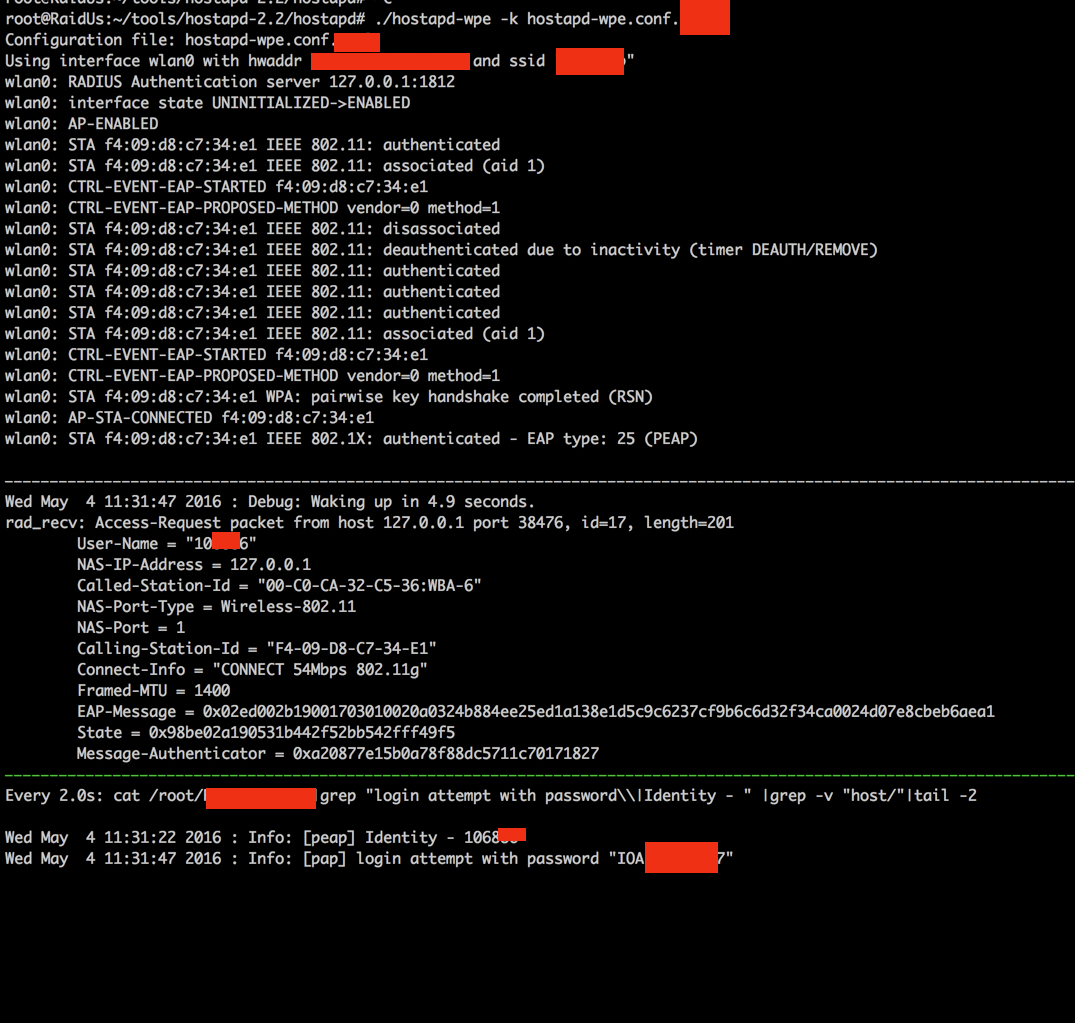
Common configuration mistakes, vulnerabilities, and chaining common network attacks while performing a wireless assessment can lead to corporate network access before lunch. Like my last Top 5 series, many of the same attack vectors used years ago still work in 2018.
Source: medium.com
Mar. 16, 2018

The suspected Chinese cyber-espionage group dubbed TEMP.Periscope appeared to be seeking information that would benefit the Chinese government, said FireEye, a U.S.-based provider network protection systems. The hackers have focused on U.S. maritime entities that were either linked to — or have clients operating in — the South China Sea, said Fred Plan, senior analyst at FireEye in Los Angeles.
Mar. 16, 2018

On Wednesday, the New York State Public Service Commission (PSC) ruled that municipal power companies could charge higher electricity ratesto cryptocurrency miners who try to benefit from the state’s abundance of cheap hydroelectric power.
Source: arstechnica.com
Mar. 16, 2018

For many photos taken with smartphones(and with some consumer cameras), geolocation information is saved with the image by default. The location is stored in theExif (Exchangable Image File Format) data of the photo itself unless geolocation services are turned off. If you have used Apple’s iCloud photo store or Google Photos, you’ve probably created a rich map of your pattern of life through geotagged metadata.
Mar. 16, 2018

When the Dutch High Tech Crime Unit took over one of the world’s biggest dark web drug marketplaces, Hansa, they knew they were onto a winner. They were able to monitor anyone who came onto the site and, potentially, start determining their real locations. This week, the Dutch cops claim to have taken out a group of prolific dark web drug pushers who operated on Hansa.
Mar. 16, 2018

Last week, Motherboard reported that the FBI had arrested the CEO of Phantom Secure, a company allegedly providing custom, security-focused BlackBerry phones to the Sinaloa drug cartel, among other criminal groups. But the feds aren’t only going after Phantom’s owner: on Thursday, the Department of Justice announced an indictment against other apparent Phantom staff too, and confirmed what one source told Motherboard before it became public knowledge—that authorities have seized Phantom’s domains used for routing messages.
Mar. 16, 2018

According to an alert from the United States Computer Emergency Readiness Team yesterday, Russia has hacked into many of our government entities and domestic companies in the energy, nuclear, commercial facilities, water, aviation and critical manufacturing sectors – essentially most of what makes our country go.
Source: forbes.com
Mar. 16, 2018

As a programmer you have a unique style, and stylometry techniques can be used to fingerprint your style and determine with high probability whether or not a piece of code was written by you. That makes a degree of intuitive sense when considering source code. But suppose we don’t have source code?
Suppose all we have is an executable binary? Caliskan et al., show us that it’s possible to de-anonymise programmers even under these conditions. Amazingly, their technique still works even when debugging symbols are removed, aggressive compiler optimisations are enabled, and traditional binary obfuscation techniques are applied!
Mar. 16, 2018

Ever since the case of the San Bernadino shooter pitted Apple against the FBI over the unlocking of an iPhone, opinions have been split on providing backdoor access to the iPhone for law enforcement. Some felt that Apple was aiding and abetting a felony by refusing to create a special version of iOS with a backdoor for accessing the phone’s data. Others believed that it’s impossible to give backdoor access to law enforcement without threatening the security of law-abiding citizens.
Mar. 16, 2018

The software, called Lightning Network, can now be used for Bitcoin payments after more than a year in which thousands of developers tested it. Lightning Labs, one of the firms developing the technology, released this initial version, which is compatible with networks being developed by other groups, such as Blockstream and Acinq.
Source: fortune.com
Mar. 16, 2018

The problem that night for Singhal, who oversees the development of the architecture for all of Intel’s processors, was that something was wrong with the patches. Among all the millions and millions of computers in use around the world running Intel CPUs, one of the patches for Spectre was causing some computers to freeze up or spontaneously reboot. Though only affecting a tiny proportion of the market, the problems were widespread enough to spook PC makers and prompt a temporary recall of the updated software.
Mar. 16, 2018
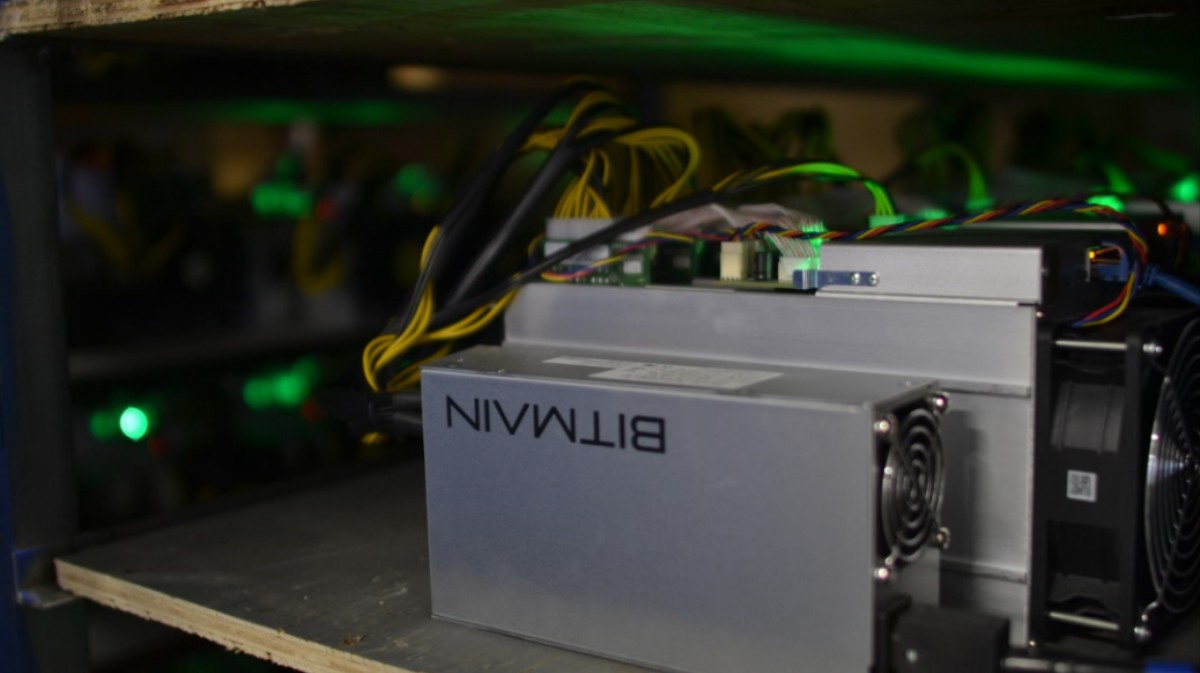
Mining is the extremely energy-intensive computational process that secures the Bitcoin blockchain and rewards miners with bitcoins. The Bitcoin moratorium was proposed by Plattsburgh Mayor Colin Read earlier this month after local residents began reporting wildly inflated electricity bills in January. The moratorium affects only new commercial Bitcoin operations and will not affect companies that are already mining in the city.