Apr. 11, 2020

Even after being warned by researchers, some companies still haven’t fixed systems that make it easy for hackers to take over accounts. Several major apps and websites, such as Paypal and Venmo have a flaw that lets hackers easily take over users’ accounts once they have taken control of the victim’s phone number. Earlier this year, researchers at Princeton University found 17 major companies, among them Amazon, Paypal, Venmo, Blizzard, Adobe, eBay, Snapchat, and Yahoo, allowed users to reset their passwords via text message sent to a phone number associated with their accounts.
Apr. 11, 2020

Microsoft says that an Emotet infection was able to take down an organization’s entire network by maxing out CPUs on Windows devices and bringing its Internet connection down to a crawl after one employee was tricked to open a phishing email attachment. The Emotetpayload was delivered and executed on the systems of Fabrikam — a fake name Microsoft gave the victim in their case study —five days after the employee’s user credentials were exfiltrated to the attacker’s command and control (C&C) server. Before this, the threat actors used the stolen credentials to deliver phishing emails to other Fabrikam employees, as well as to their external contacts, with more and more systems getting infected and downloading additional malware payloads.
Apr. 11, 2020

How to remove xHelper malware from Android, cybersecurity researcher unveiled today.
Source: thehackernews.com
Apr. 11, 2020

With the right safeguards, aggressive disease surveillance is likely permissible under the Fourth Amendment. Like governments around the world, the United States is struggling with the “coronavirus trilemma”: It wants to protect lives, ease social isolation, and protect privacy and civil liberties, but it can do only two of those at the same time. In particular, and as South Korea’s successful management of the coronavirus shows, extensive surveillance may be the only way to control the outbreak while preserving some degree of normalcy for economic and social life.
Apr. 11, 2020

Google backs Apple’s SMS OTP standard proposal Apple’s proposal to standardize the format of SMS OTPs (one-time passcodes) moves to the WICG. Google is now backing a standard proposed by Apple engineers in January to create a default format for one-time passcodes (OTP) sent via SMS to users during the two-factor authentication (2FA) process. The standard, proposed by Apple engineers working on the Safari WebKit project, has now reached the status of official Web Platform Incubator Community Group (WICG) specification draft.
Apr. 11, 2020

What are the security improvements in fingerprint scanning since it was first defeated on the iPhone 5? How does 3-D printing technology impact fingerprint authentication?
Define a threat model to the attacks to provide a realistic context.
Source: talosintelligence.com
Apr. 11, 2020

In February, KrebsOnSecurity told the story of a private citizen auctioning off the dangerous domain corp.com for the starting price of $1.7 million. Domain experts called corp.com dangerous because years of testing showed whoever wields it would have access to an unending stream of passwords, email and other sensitive data from hundreds of thousands of Microsoft Windows PCs at major companies around the globe. This week, Microsoft Corp. agreed to buy the domain in a bid to keep it out of the hands of those who might abuse its awesome power.
Apr. 11, 2020
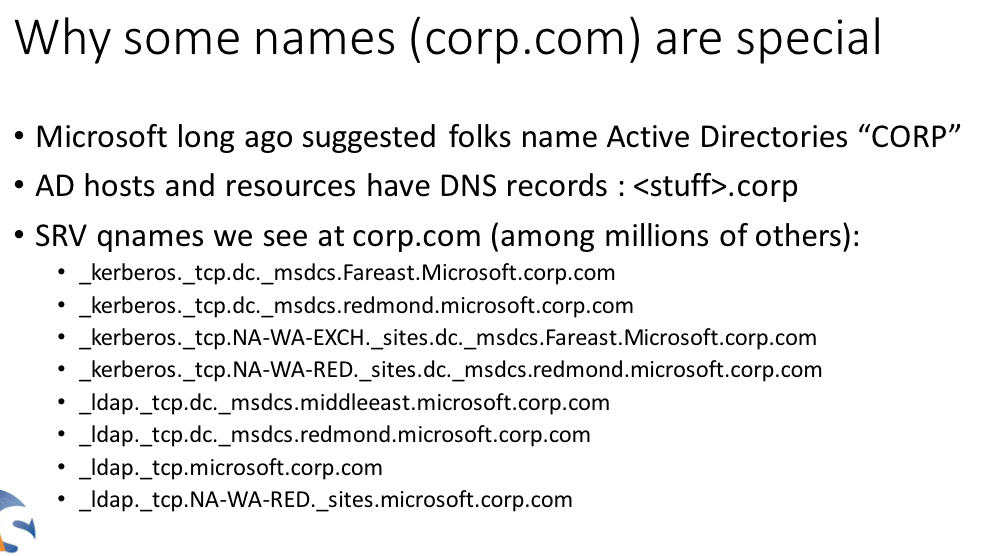
As anearly domain name investor, Mike O’Connor had by 1994 snatched up several choice online destinations, including bar.com, cafes.com, grill.com, place.com, pub.com and television.com. Some he sold over the years, but for the past 26 years O’Connor refused to auction perhaps the most sensitive domain in his stable — corp.com. It issensitive because years of testing shows whoever wields it would have access to an unending stream of passwords, email and other proprietary data belonging to hundreds of thousands of systems at major companies around the globe.
Apr. 11, 2020

Cloudflare’s CEO said it is replacing Google’s reCAPTCHA tool with hCaptcha due to pricing, privacy and availability concerns.
Source: threatpost.com
Apr. 11, 2020

Firefox users have recently started to notice that YouTube does not display videos properly when they enable the browser’s anti-fingerprinting technology for better privacy.
Source: bleepingcomputer.com
Apr. 11, 2020
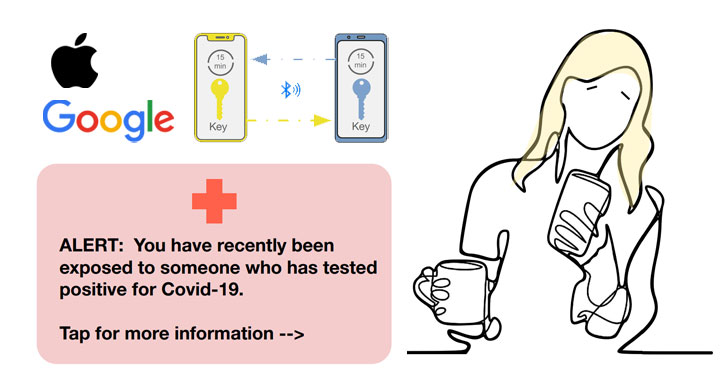
Apple and Google have joined forces to develop an interoperable contract-tracing tool that will help individuals determine if they have come in contact with someone infected with COVID-19. When two people come in close contact for a certain period of time (say 10 minutes or more), their phones will exchange anonymous identifier beacons. The identifiers rotate every 15 minutes and have no personally identifiable information.
Apr. 5, 2020

A few weeks ago, New York City’s 75,000 teachers scrambled to learn how to use videoconferencing services like Zoom as novel coronavirus cases began to rise and schools prepared to close their doors and institute remote learning. Now, the city’s teachers will have to scramble once more, after Department of Education Chancellor Richard Carranza announced late last night that he had decided to ban Zoom, citing security and privacy issues with the platform.
Apr. 3, 2020

Reported by Motherboard, when Facebook was starting to build its spyware cloaked in a VPN product, Onavo Protect for iOS and Android, the social media company reached out to the controversial company NSO Group that creates spyware for government agencies. NSO declined to sell Pegasus to Facebook, but it stillbuilt and launched Onavo without Pegasus as a spyware tool in early 2018 under the misleading pretense of being a VPN app.
Apr. 3, 2020

The US Federal Aviation Administration has ordered Boeing 787 operators to switch their aircraft off and on every 51 days to prevent what it called ‘several potentially catastrophic failure scenarios’ – including the crashing of onboard network switches. The airworthiness directive, due to be enforced from later this month, orders airlines to power-cycle their B787s before the aircraft reaches the specified days of continuous power-on operation. The power cycling is needed to prevent stale data from populating the aircraft’s systems, a problem that has occurred on different 787 systems in the past.
Mar. 22, 2020

Greenidge Generation, a natural gas power plant near the town of Dresden in the Finger Lakes region, announced it had successfully installed a mining farm in its facility. Comprised of nearly 7,000 mining rigs and powered by electricity generated on-site, the facility can mine an average of 5.5 bitcoins (BTC) every day, roughly $50,000, according to CoinDesk’s Bitcoin Price Index. Greenidge uses its own ‘behind the meter’ power, the generated electricity it uses itself at the basic cost of production.
Mar. 20, 2020

‘Google will never sell any personal information to third parties; and you get to decide how your information is used.’ – Sundar Pichai Sound familiar? Although big tech companies like Google keep the lights on by harvesting and monetizing your personal data, they can be quick to mince words and deny the strawman scenario of exchanging hard drives full of your data for a suitcase of money.
Mar. 19, 2020

Internal documents, published byThe Intercept over the weekend, show that the social network instructed moderators to not promote videos from users who had ‘ugly facial looks’ such as scars, too many wrinkles and fangs to the app’s ‘For You’ page. Getting a video highlighted on that page could help a user attract more views and followers. Users who had an ‘obvious beer belly’ or shot their videos in a ‘shabby and dilapidated’ environment such as a slum might have also been excluded from the page.
Mar. 19, 2020

Concerns over cybersecurity risk and possible spying by China have already brought about bans from DHS, DoD, TSA, and the State Department. On Thursday, two US senators introduced a bill that would ban all federal employees from using the Chinese singing/dancing/jokey platform on government phones. The bill comes from Senators Josh Hawley (R-MO) and Rick Scott (R-FLA).
It would expand on current TikTok bans from the State Department, the Department of Homeland Security (DHS), the Department of Defense (DoD), and the Transportation Security Administration (TSA).
Mar. 19, 2020

If you’re working from home and using Zoom, you probably want to read this. During the COVID-19 pandemic, millions of Americans will be forced to work, play, and learn from home for the foreseeable future.
Such a massive shift will lean not only on shaky and expensive U.S. broadband networks, but popular teleconferencing programs that often don’t quite work as advertised. Zoom in particular has seen a flood of new users, and the company’s stock has jumped roughly 20 percent since the COVID-19 outbreak began. But as new users flock to the platform for work, they should be aware of a few things: namely, the company’s data collection, its shaky privacy policy, and the fact your boss knows when you’re not giving them your undivided attention.
Mar. 19, 2020

What a nightmare: your phone goes dead, and you can’t log into your bank account because it’s controlled by a hacker who’s draining you dry. After months-long, cross-border investigations, Europol announced on Friday that it’s arrested more than two dozen people suspected of draining bank accounts by hijacking victims’ phone numbers via SIM-swap fraud. Following a ramp-up in SIM-jacking over recent months, police across Europe have been gearing up to dismantle criminal networks that organize these attacks, Europol says.