Mar. 19, 2020

Social engineering-driven malware threats continue to be a big threat, but new research details how cybercriminals profit off such schemes to launder hundreds of thousands of dollars from stolen credit cards of unsuspecting victims.
Source: thehackernews.com
Mar. 19, 2020
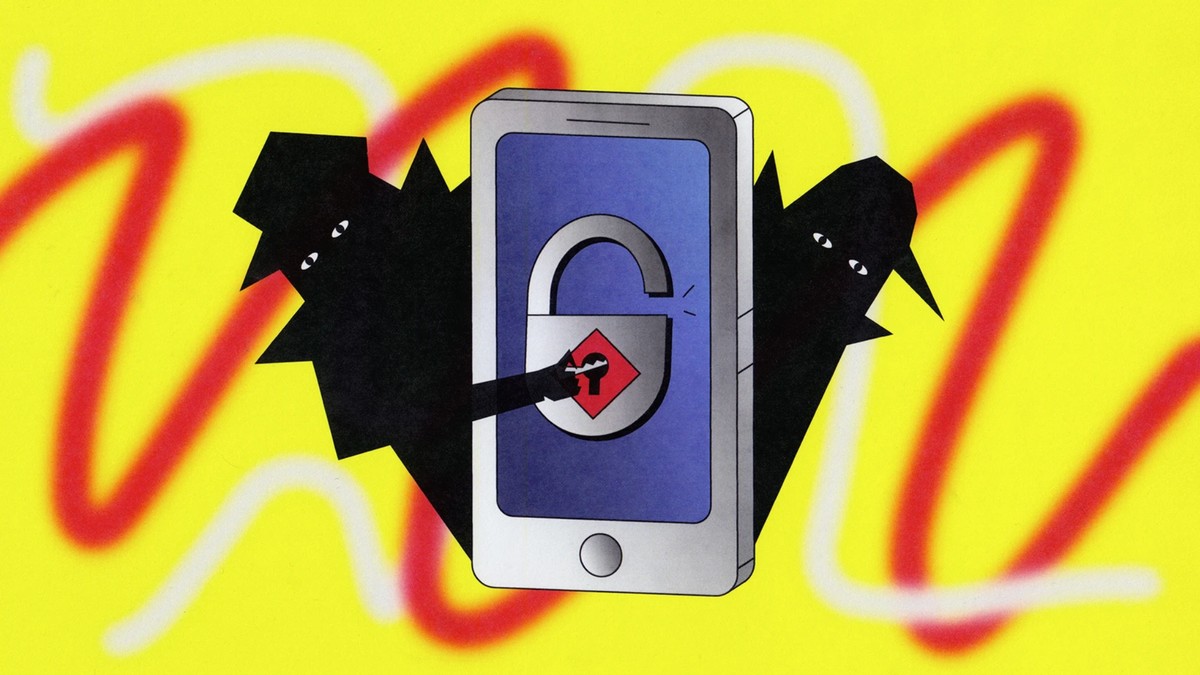
The cost of an annual license for the online version of GrayKey increased to $18,000, according to emails obtained by Motherboard. Last year, iOS forensics firm Grayshift increased the price of one of its iPhone unlocking products because breaking into iPhones became harder, according to emails obtained by Motherboard. The news shows that although federal agencies and local police around the country have purchased the company’s GrayKey device to break into locked and encrypted iPhones, that sort of access is not necessarily constant.
Mar. 19, 2020

WordPress and Apache Struts account for 55% of all weaponized vulnerabilities Comprehensive study looks at the most attacked web technologies of the last decade. A study that analyzed all the vulnerability disclosures between 2010 and 2019 found that around 55% of all the security bugs that have been weaponized and exploited in the wild were for two major application frameworks, namely WordPress and Apache Struts.
Mar. 19, 2020

We are seeing how the monopolistic repair and lobbying practices of medical device companies are making our response to the coronavirus pandemic harder. As hospitals face the prospect of a critical ventilator shortage caused by the worst public health crisis in a century, they face another problem: not being able to repair the ventilators that they do have. This is because, like John Deere, Apple, and so many other electronics companies, the major device manufacturers have spent the last several years cementing a repair monopoly.
Mar. 15, 2020

For those who would like to opt out of Facebook tracking, the Facebook Container extension for the Firefox browser will block those embedded widgets on non-Facebook pages. And in doing so, Firefox helps you protect your browsing history and data from Facebook.
Source: mozilla.org
Mar. 8, 2020

Since 2011, Congress has provided Israel more than $1.5 billion to produce Iron Dome batteries, developed by Rafael Advanced Defense Systems. In August 2011, Raytheon and Rafael — which partnered on David’s Sling, a US-Israeli cooperative missile defense development program — announced an agreement to allow Raytheon to market Iron Dome in the United States. In 2014, the US and Israeli governments signed a co-production agreement to enable some portions of the Iron Dome system to be produced in the United States.
Mar. 6, 2020

Last week, KrebsOnSecurity reported to health insurance provider Blue Shield of California that its Web site was flagged by multiple security products as serving malicious content. Blue Shield quickly removed the unauthorized code. An investigation determined it was injected by a browser extension installed on the computer of a Blue Shield employee who’d edited the Web site in the past month.
The incident is a reminder that browser extensions — however useful or fun they may seem when you install them — typically have a great deal of power and can effectively read and/or write all data in your browsing sessions. And as we’ll see, it’s not uncommon for extension makers to sell or lease their user base to shady advertising firms, or in some cases abandon them to outright cybercriminals. The health insurance site was compromised after an employee at the company edited content on the site while using a Web browser equipped with a once-benign but now-compromised extension which quietly injected code into the page.
Mar. 6, 2020

10 most innovative cybersecurity companies that deserve your attention by their distinctive technical or scientific approach, value-proposition or long-term vision.
Source: thehackernews.com
Mar. 6, 2020

Joshua Schulte stands accused of stealing the highly valuable materials directly from the CIA’s innermost sanctum and slipping them to WikiLeaks to share with the rest of the planet. Federal prosecutors have spent the past four weeks explaining exactly why they believe that to be the case. And Uncle Sam’s lawyers have developed a compelling case to send Schulte away for virtually the rest of his life.
Mar. 6, 2020

Over the past few years, owners of cars with keyless start systems have learned to worry about so-called relay attacks, in which hackers exploit radio-enabled keys to steal vehicles without leaving a trace. Now it turns out that many millions of other cars that use chip-enabled mechanical keys are also vulnerable to high-tech theft. A few cryptographic flaws combined with a little old-fashioned hot-wiring—or even a well-placed screwdriver—lets hackers clone those keys and drive away in seconds.
Mar. 6, 2020

Earlier this week, the non-profit certificate authority, which issues HTTPS certs for free, announced a plan to disable some three million certificates tainted by a software bug. The programming blunder, in Let’s Encrypt’s automated certificate management software, affects users who create a certificate for a domain and then, some days later, create more related certificates – the code bungled the rechecking process that needed to take place. Website owners were told to fix their certs as soon as possible because mass revocation would begin on March 4, at 16:00 PT (00:00 UTC).
Mar. 4, 2020

Let’s Encrypt to revoke 3 million certificates on March 4 due to software bug Let’s Encrypt issued 3,048,289 TLS certificates without checking the CAA field for the requesting domain. More specifically, the bug impacted Boulder, the server software the Let’s Encrypt project uses to verify users and their domains before issuing a TLS certificate.
Source: zdnet.com
Mar. 3, 2020

Dr. Schmidt is the chairman of the National Security Commission on Artificial Intelligence and the Defense Innovation Board. He is the former chairman and C.E.O. of Google. Silicon Valley leaders may be putting too much faith in the private sector to ensure U.S. global leadership in new technology.
America’s companies and universities innovate like no other places on earth. We are garage start-ups, risk-taking entrepreneurs and intrepid scholars exploring new advances in science and technology. But that is only part of the story.
Mar. 3, 2020

The intellectual property had an estimated value of $1 billion to the US company it belonged to. A Chinese scientist has been issued a prison sentence of two years for stealing next-generation battery technology from his US employer. The former associate scientist, Hongjin Tan, has also been ordered to pay $150,000 in restitution and will spend three years on supervised release, the US Department of Justice (DoJ) said on Thursday.
Mar. 3, 2020
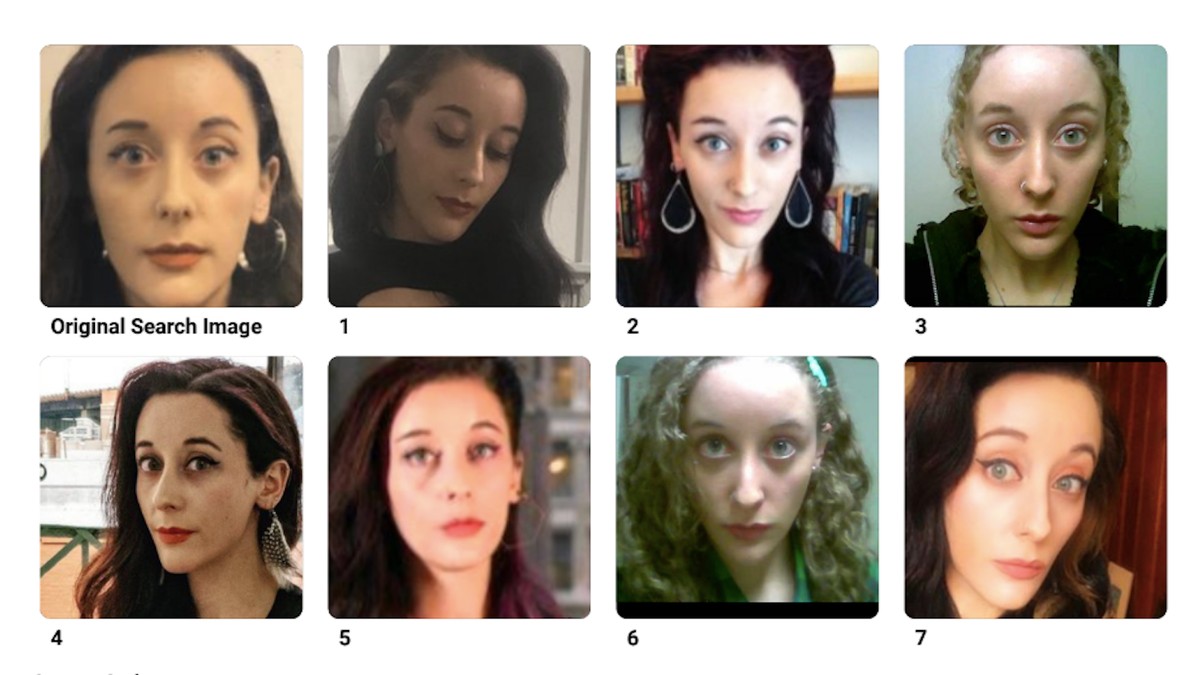
We used the California Consumer Privacy Act to see what information the controversial facial recognition company has collected on me. What goes unsaid here is that Clearview claims to do these things by building an extremely large database of photos of ordinary U.S. citizens, who are not accused of any wrongdoing, and making that database searchable for the thousands of clients to whom it has already sold the technology. I am in that database, and you probably are too.
Mar. 3, 2020

US Congress passed legislation offering $1 billion to help telecom carriers “rip and replace” equipment from Chinese giants Huawei and ZTE. On Thursday, US lawmakers have passed legislation that plans to give $1 billion to telecom carriers to “rip and replace” equipment from Chinese tech giants Huawei and ZTE.
Source: securityaffairs.co
Mar. 3, 2020

The complaint in question is centered around Operation Rubicon, the focus of a recent investigation by the Washington Post, ZDF, and SRF into Swiss company Crypto AG. Crypto AG is a seller of encoded and encrypted devices deemed suitable — and secure enough — for confidential government communications. It is estimated that over 100 governments worldwide have been counted as Crypto AG clients over the course of decades.
Mar. 3, 2020

Researchers have discovered a new means to target voice-controlled devices by propagating ultrasonic waves through solid materials in order to interact with and compromise them using inaudible voice commands without the victims’ knowledge. Called ‘SurfingAttack,’ the attack leverages the unique properties of acoustic transmission in solid materials — such as tables — to ‘enable multiple rounds of interactions between the voice-controlled device and the attacker over a longer distance and without the need to be in line-of-sight.’
Mar. 3, 2020

There have been a few moments in the past few years, when a conspiracy theory is suddenly demonstrated to be based in fact. Once upon a time, it was an absurd suggestion that the NSA had data taps in AT&T buildings across the country. Just like Snowden’s revelations confirmed those conspiracy theories, a news in February confirmed some theories about Crypto AG, a Swiss cryptography vendor.
Mar. 3, 2020

Experts from Cybaze/ Yoroi Zlab spotted a new sample of the Karkoff implant that was employed in past campaigns associated with Iran-linked APT34 group. Experts from Cybaze/ Yoroi Zlab spotted a new sample of the Karkoff implant that was employed in past campaigns associated with Iran-linked APT34 group. In November 2018, researchers from Cisco Talos tracked and detailed a “DNSEspionage” campaign against targets in Lebanon and UAE.