Sep. 14, 2019

France and Germany have agreed to block Facebook’s Libra cryptocurrency, the French finance ministry said on Friday. In a joint statement, the two governments affirmed that “no private entity can claim monetary power, which is inherent to the sovereignty of nations”. French Finance Minister Bruno Le Maire said on Thursday that Facebook’s new cryptocurrency should not be allowed to operate in Europe while concerns persist about sovereignty and persistent financial risks.
Sep. 14, 2019

The French finance minister, Bruno Le Maire, said plans for Libra could not move ahead until concerns over consumer risk and governments’ monetary sovereignty were addressed. Facebook unveiled plans for Libra in June, triggering immediate warnings from some experts that it could shift control over the economy from governments and their central banks to big business. The launch also raised concern about the risks such a currency could pose to consumers, particularly after the Cambridge Analytica scandal, which drew attention to Facebook’s management of its customers’ data.
Feb. 9, 2019

Troubled Canadian crypto exchange QuadrigaCX owes its customers $190 million and cannot access most of the funds, according to a court filing obtained by CoinDesk. In a sworn affidavit filed Jan. 31 with the Nova Scotia Supreme Court, Jennifer Robertson, identified as the widow of QuadrigaCX founder Gerald Cotten, said the exchangeowes its customers roughly $250 million CAD ($190 million) in both cryptocurrency and fiat. The company previously announced it hadfiled for creditor protectionon its website, but the filing itself provides greater details about its predicament.
Jan. 29, 2019
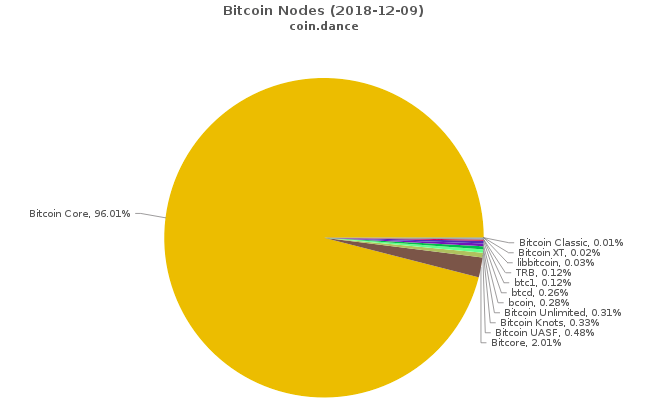
The question of who controls the ability to merge code changes into Bitcoin Core’s GitHub repository tends to come up on a recurring basis. This has been cited as a “central point of control” of the Bitcoin protocol by various parties over the years, but I argue that the question itself is a red herring that stems from an authoritarian perspective—this model does not apply to Bitcoin. It’s certainly not obvious to a layman as to why that is the case, thus the goal of this article is to explain how Bitcoin Core operates and, at a higher level, how the Bitcoin protocol itself evolves.
Dec. 9, 2018

One small crypto programming error can lead to millions in lost funds. As you are about to learn, a bug in your code can equal disaster on the blockchain. These far-reaching consequences are all the more reason to make your project open-source.
Open-source projects gain added security because of the large number of developers checking the code for errors. That being said, even open-source projects contain programming mistakes. Let’s take a moment to examine the five biggest crypto programming errors in history.
Nov. 16, 2018

Chip designer Nvidia Corp on Thursday forecast disappointing sales for the holiday quarter, pinning the blame on unsold chips piling up with distributors and retailers after the evaporation of the cryptocurrency mining boom. The Santa Clara, California-based company also posted sales that missed expectations for its third quarter. Shares plunged nearly 17 percent in late trading to $168.32.
For decades, Nvidia has supplied gaming cards to boost computer graphics, but in recent years cryptocurrency miners adopted the company’s cards to turn bits into wealth.
Sep. 20, 2018

In a major development, Japanese crypto exchange Zaif has been on the receiving end of a hacking incident last week, local media has reported. The hack, which occurred on Sept. 14 but was not discovered until Sept. 17, saw the hacker steal 4.5 billion yen from users hot wallets, as well as 2.2 billion yen from the assets of the company, with total losses amounting to 6.7 billion yen or around $59.7 million. Tech Bureau Inc. which operates the digital currency exchange Zaif said in a press release that the company noticed certain abnormalities on September 17, and the hacking damage was confirmed on September 18.
Sep. 19, 2018

Over the last 24 hours, the cryptocurrency community has been discussing a critical vulnerability that was found in the Bitcoin Core (BTC) reference client. A bug introduced in Bitcoin Core version 0.14, that also affects all subsequent versions, could have caused a great majority of current Core nodes to crash. According to the developer’s Optech newsletter, Core contributors released a patch that fixes Core version 0.16.2 and the latest 0.16.3 fix requires an immediate upgrade.
Sep. 17, 2018

The virtual machine that allows ethereum to compute everything in a decentralized way is getting a massive overhaul. At the heart of ethereum lies a virtual computer. Stored across tens of thousands of nodes that make up the platform, the ethereum virtual machine, or EVM, is responsible for executing the countless tokens,dapps, DAOs and digital kittens of which the blockchain is comprised of.
Sep. 16, 2018
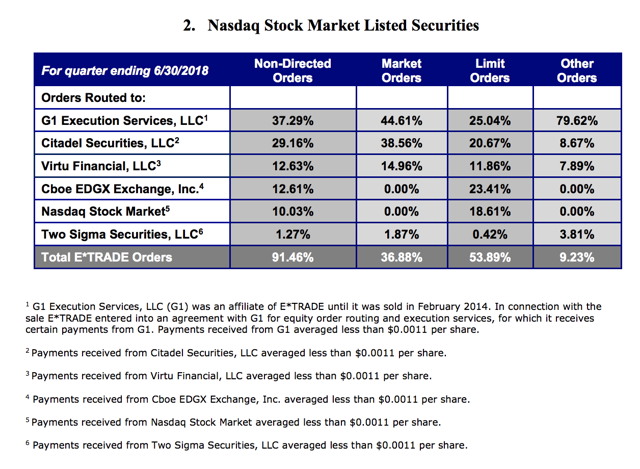
Robinhood is marketed as a commission-free stock trading product but makes a surprising percentage of their revenue directly from high-frequency trading firms. It appears from recent SEC filings that high-frequency trading firms are paying Robinhood over 10 times as much as they pay to other discount brokerages for the same volume. Robinhood needs to be more transparent about their business model.
Sep. 12, 2018
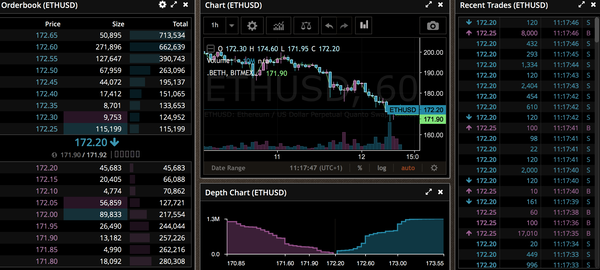
A crypto trading exchange with eye-watering margins of 100x has angered ethereans after Bitmex’s CEO, Arthur Hayes, appeared to tell his customers, under an official Bitmex account, to short eth. Hayes then goes on to use some very colorful and highly professional language in contrast to his public tweet which said: No punting here, but to all the Bitmex customers, which are automatically subscribed to a “newsletter,” he told them eth is “a double digit” colorful coin. In other words, Bitmex hates ethereum and as of today Bitmex is apparently handling $3 billion in trading volumes for the eth/usd perpetual swap.
Sep. 5, 2018

Bittrex, one of the largest cryptocurrency exchange platforms, has delisted Bitcoin Gold (BTG) from its trading platform over the weekend after BTG maintainers declined to pay half of the damages Bittrex suffered during a complex multi-stage cyber-attack earlier this year. According to a statement from the BTG team, Bittrex asked the BTG team to pay 12,372 BTG (~$256,000) as reparations for the attacks. BTG maintainers said they did all that was possible on their end to help trading platforms prevent the attacks, but they did not have the legal power to intervene inside a private company like Bittrex.
Sep. 4, 2018

Vitalik Buterin, Zoë Hitzig and E. Glen Weyl yesterday released their paper Liberal Radicalism: Formal Rules for a Society Neutral among Communities. As prior readers will know, I tend to break down whitepapers I suspect most of the community won’t have the time or inclination to do. This falls squarely in that bracket given it is self admittedly ‘strange’ and weighs in at a healthy 41 pages.
Sep. 4, 2018

There are free-riders in the cryptocurrency ecosystem. At least, that’s the contention of a new paper, shared with CoinDesk on Monday, written by ethereum founder Vitalik Buterin,Microsoft researcher Glen Weyl and Ph.D. of economics at Harvard, Zoë Hitzig. And free-riders pose a problem.
Described in the paper, free-riders are people or businesses that profitfrom the under-provision of public goods. And, on top of that, ‘the more people [these public goods] benefit the more they will be under-provided.’ It’s an issue that plagues development even outside the cryptocurrency space, but the authors are – at least – initially focused on how the idea creates harmful incentives for the funding of blockchain projects.
Sep. 4, 2018

Mysterious movements from the original Silk Road wallet suggest that the US government is cashing out on the Bitcoin gradually. The Silk Road market may be dead—we actually checked just to see if it came back somehow—but its wallet appears to be alive. Over a billion dollars in Bitcoin are being moved from several wallets that are all tied to the supposed original Silk Road cold storage wallet.
Sep. 4, 2018

Ethereum community got all curious and agitated after Tech Crunch published an article on Ethereum – ‘collapse of ETH is inevitable’. Number of questions and doubts popped up and to answer it all co-founder Vitalik Buterin wrote a post giving an insight about it. Surprisingly, he agrees ‘collapse of ETH is inevitable’, at least for now.
Cryptocurrency entrepreneur Jeremy Rubin wrote the Tech Crunch article stipulating the price of ETH and that it is bound to plummet. Vitalik Buterin agreeing to the piece wrote on Reddit, “In Ethereum as it presently exists, this is absolutely true.” Buterin further added, “[A]nd in fact if Ethereum were not to change, all parts of the author’s argument […] would be correct.”
Aug. 28, 2018

A new EOS bug has been discovered that allows users to use malicious code to steal RAM, which is a scarce resource in EOS blockchain. EOS,the fifth-largest cryptocurrency in terms of capitalization, has made headlines in connection with a new issue. A new EOS bug has been discovered that allows stealing resources directly from a user.
The resource in question is RAM, which is valuable in the EOS blockchain due to its scarcity. EOS is working on solving the issue and has provided a temporary fix in the meantime. The EOS blockchain aims to be a decentralized operating system and to allow the running of decentralized applications and smart contracts.
Jul. 3, 2018

Announcing the first excerpt to a literary work consisting of two parts. The excerpt is provided. I wanted to include it as a brief glimpse of history.
Even for those that can’t read the full book, I wanted to make this available to everyone. A short story if you will, with some of the most brought up questions and answers. I wanted the people and the facts to be known.
Jul. 3, 2018
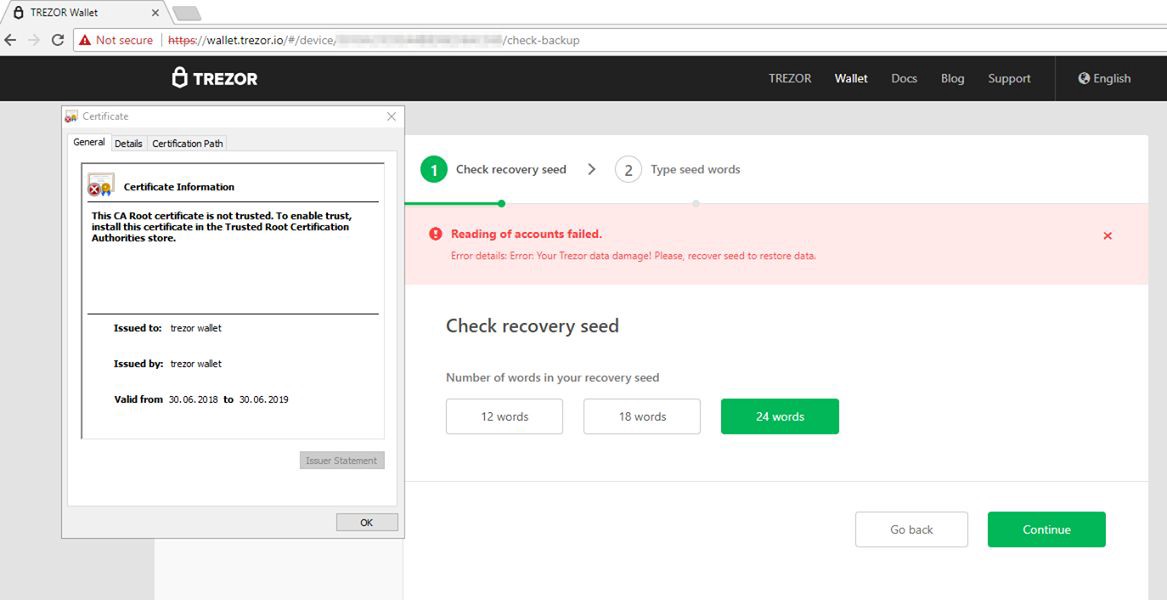
The Trezor team says ‘signs point toward DNS poisoning or BGP hijacking’ as the means attackers hijacked legitimate traffic meant for the official wallet.trezor.io domain but redirected these users to a malicious server hosting a fake website. An investigation is still underway to determine the exact cause. The incident came to light after users complained that they encountered an invalid HTTPS certificate when landing on Trezor’s web wallet portal.
Jun. 30, 2018

European law enforcement agencies dismantled a Darknet drug trafficking network, seizing almost 800,000 doses of LSD and over $5 million in Bitcoin, IOTA, and Lumens. Ulbricht, better known by his deep web pseudonym, “Dread Pirate Roberts,” was charged with narcotics trafficking, computer hacking, and money laundering after his arrest at the Glen Park Branch Library in San Francisco on October 1, 2013. The FBI seized 144,336 Bitcoins during the Silk Road bust, which they auctioned for a meager $48 million.