Jun. 9, 2018
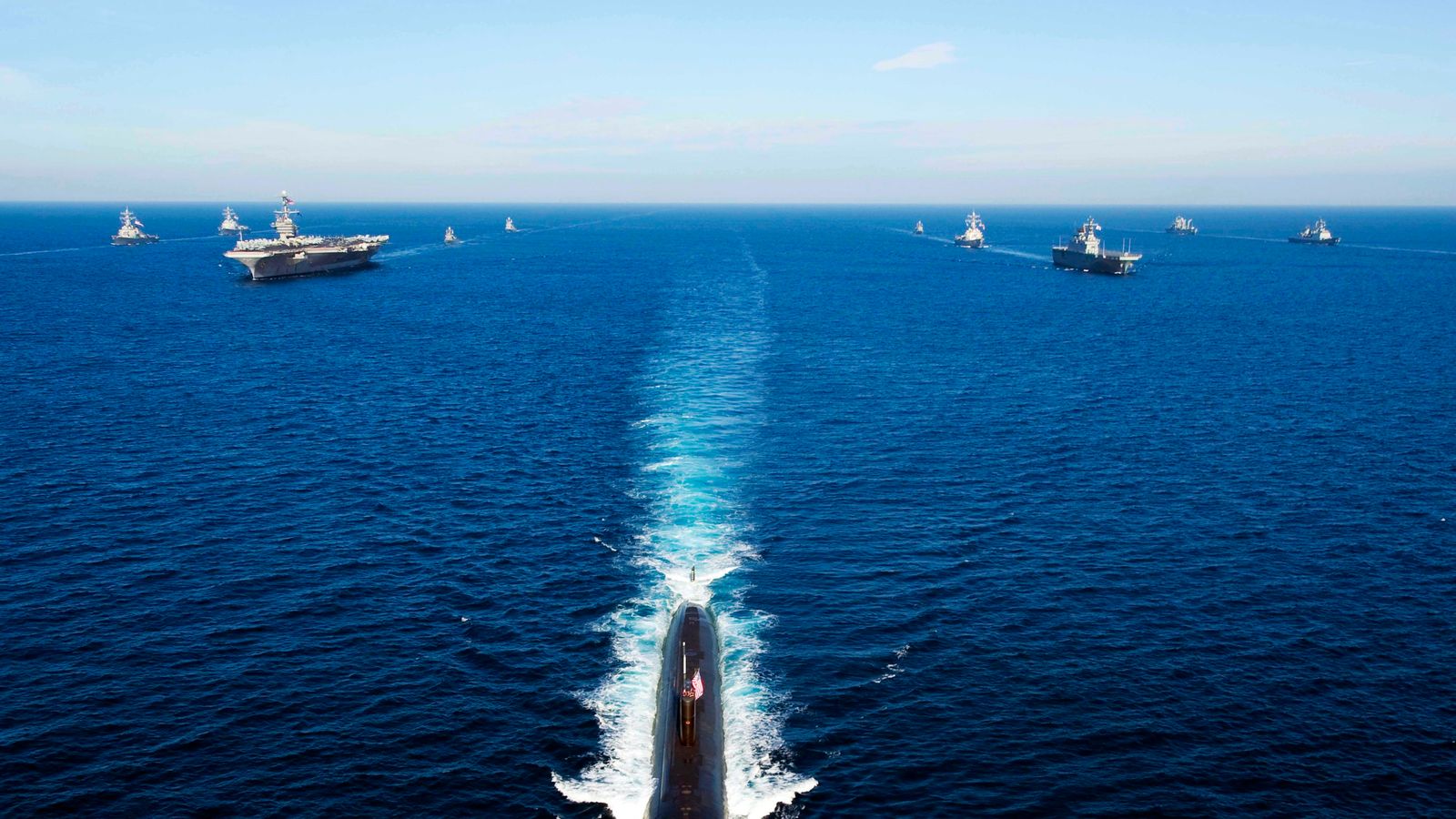
China’s state hackers have reportedly stolen a large amount of highly-sensitive US navy data on its undersea warfare, including plans for supersonic anti-ship missiles on submarines. Government experts were said to have compromised the computers of a US navy contractor, giving them access to the information, according to the Washington Post, citing unnamed American officials. They said – on the condition of anonymity about an ongoing investigation – that the security breaches were believed to have taken place in January and February.
May. 23, 2018

The case draws eerie similarities to mysterious ‘health attacks’ in Cuba. The US government issued an alert Wednesday following reports that a government employee stationed in southern China experienced “subtle and vague, but abnormal, sensations of sound and pressure” and sustained a brain injury.
Responding to an email from the New York Times, a spokesperson for the United States Embassy in Beijing said that the unnamed employee was working in the US consulate in the city of Guangzhou, just northwest of Hong Kong, and experienced a variety of symptoms from late 2017 until April of this year. In statements to the BBC, she noted that the employee had been sent back to the US. Last Friday, the 18th of May, “the embassy was told that the clinical findings of [an] evaluation matched mild traumatic brain injury,” she wrote.
Apr. 30, 2018
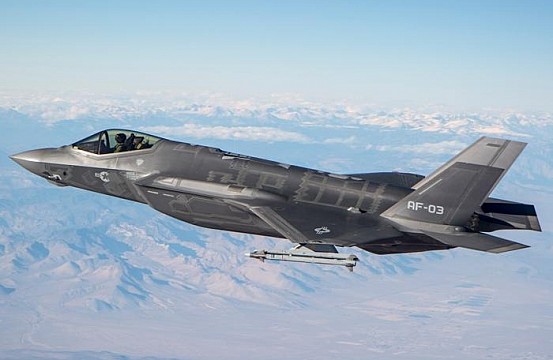
While the F-35 retains some radar evading capabilities, its radar cross section is over ten times greater than that of the F-22 making it far less survivable — leading some analysts to term it a “pseudo stealthy”fighter. The F-35 has less than half the range of the larger F-22 and lacks the Raptor’s advanced long ranged air-to-air missiles, which for an archipelago nation separated from its potential adversaries by vast seas are major shortcomings. As a single engine light platform with a small arsenal of just four air-to-air missiles, restricted to a below average speed of Mach 1.6 and a very low altitude relative to the Raptor, the F-15J, and elite twin engine Chinese fighters,the F-35 hardly presents an adequate solution to counter China’s growing fleet of J-11 fighters — let alone more advanced platforms more recently deployed by Beijing such as the Su-35 or J-20.
Apr. 29, 2018
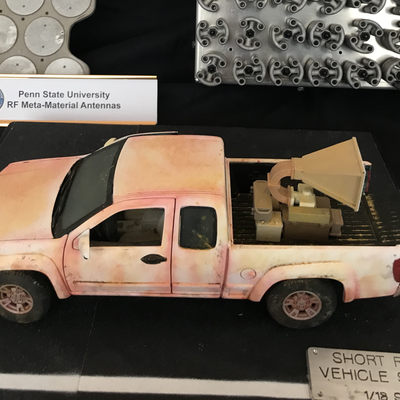
Law’s crew has dubbed the device the Radio Frequency Vehicle Stopper. They’re working on two versions. A small one, vaguely resembling an old-time phonograph, can fit in the bed of a truck.
With a range of 50 meters, it is intended for hot pursuits. To deploy it, the driver would pull out in front of the attacker and turn it on.
Apr. 26, 2018
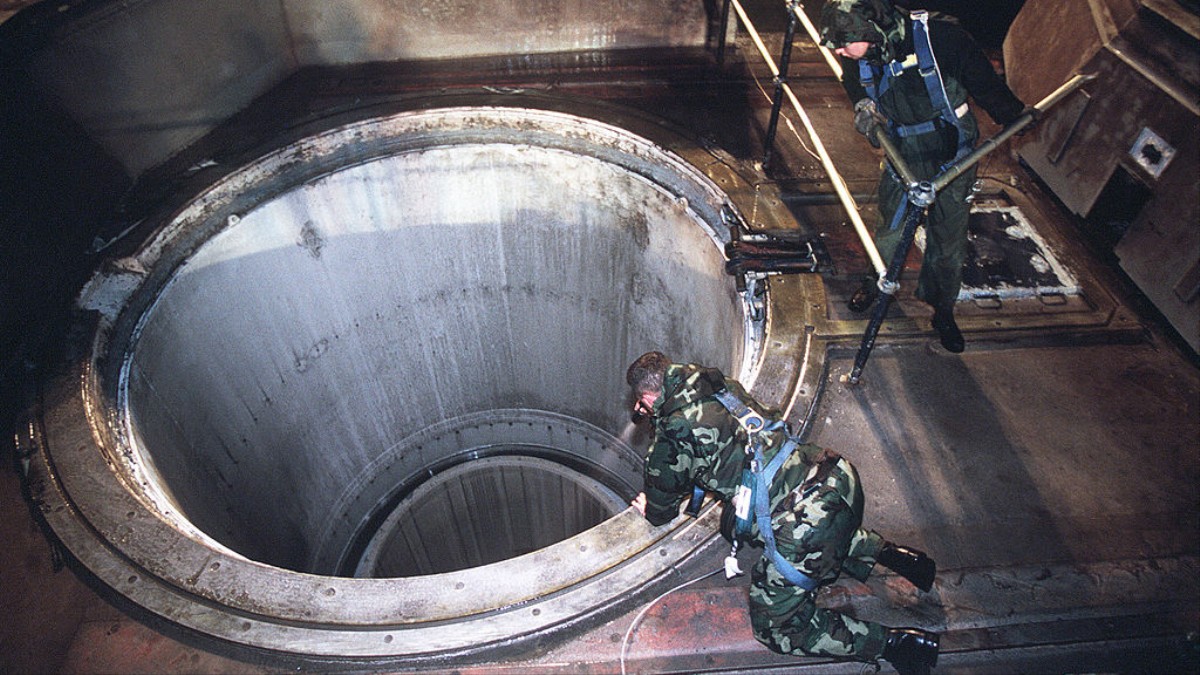
In 1983, Soviet Lieutenant Colonel Stanislav Petrov sat in a bunker in Moscow watching monitors and waiting for an attack from the US. If he saw one, he would report it up the chain and Russia would retaliate with nuclear hellfire. One September night, the monitors warned him that missiles were headed to Moscow.
But Petrov hesitated. He thought it might have been a false alarm.
Apr. 23, 2018
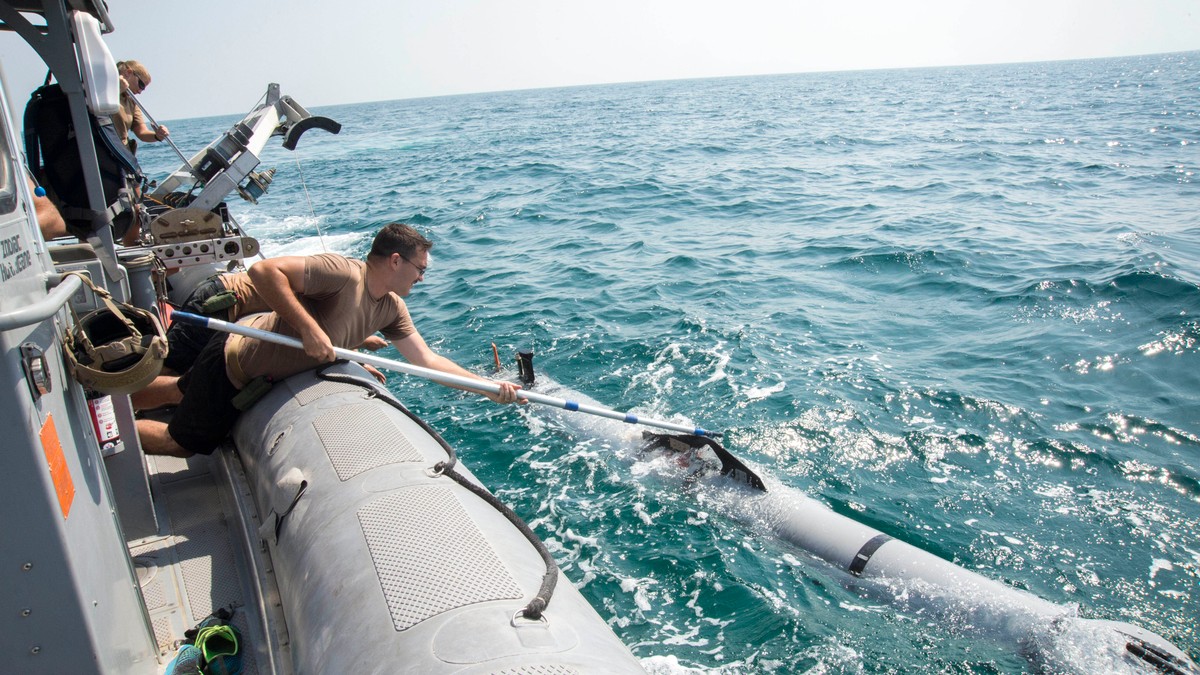
A California company is working on an underwater refueling station that can top off the fuel cells of undersea surveillance drones, allowing the vehicles to venture farther and work longer.
Source: vice.com
Mar. 29, 2018

In its “active defense” military strategy, China was very clear about the importance of outer space, identifying it as a critical security domain, along with the oceans, cyberspace, and nuclear force. Outer space was also singled out as a command post along with cyberspace. In Japan, as the country began to orient its national space strategy on the basis of a new Basic Space Law in 2008, there is evidence to suggest that the defense policymakers already thought of outer space as the fourth domain, after land, sea, and air.
Mar. 28, 2018
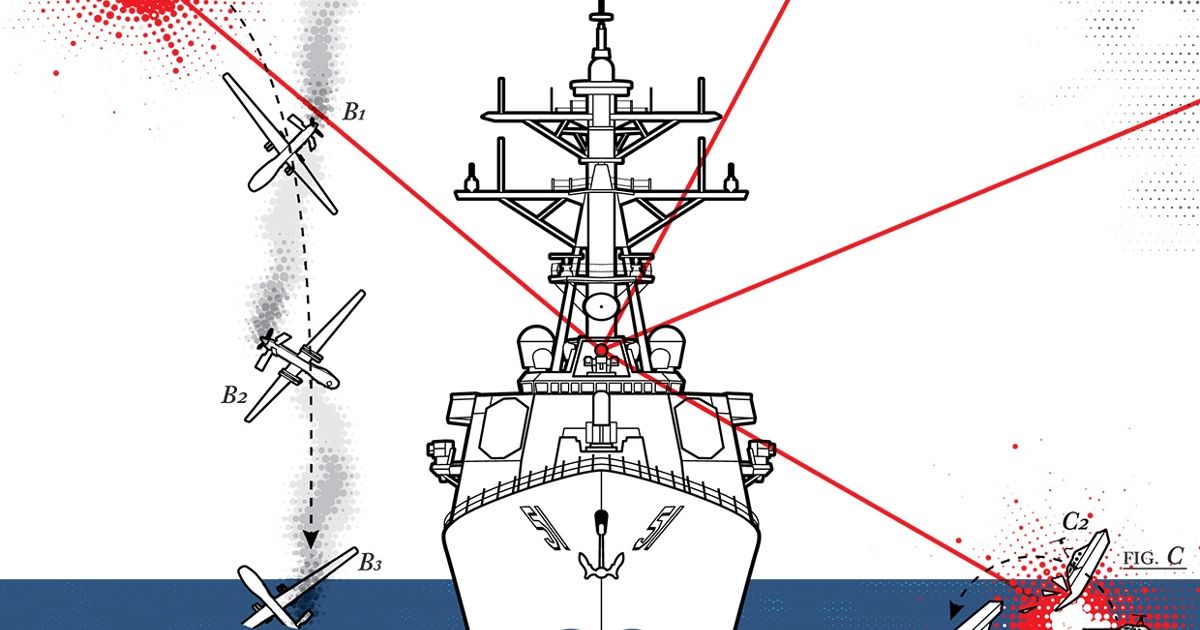
The U.S. Navy’s most advanced laser weapon looks like a pricey amateur telescope. As it emerges from a chassis high on the USS Ponce tolook out onto the daytime sky above the Persian Gulf, its operator sits inadarkened room elsewhere on the ship holding what looks like a game controller. The screen before him is showing a small boat floating near the Ponce, carrying a dark object.
Mar. 25, 2018

The US military is working on an experimental laser technology that could create the sound of voices out of thin air by altering atoms. The US military’s Joint Non-Lethal Weapons Program, or JNLWD, thinks it can achieve this goal in the next few years.
Source: interestingengineering.com
Mar. 22, 2018

Much of the push to formalize an off-planetbranch of the U.S. armed forces is motivated by space investment by Russia and China, the latter of which is eager to establish itself as a superpower with plans for an orbiting space station and a permanent outpost on the moon. Meanwhile, Russiaunder President Vladimir Putinhas become increasingly aggressive, annexing Crimea, deploying more sophisticated nuclear weapons and waging conventional warfarein eastern Ukraine and Syria. But he, too, has aspirations, albeit troubled ones, up above.
Mar. 22, 2018
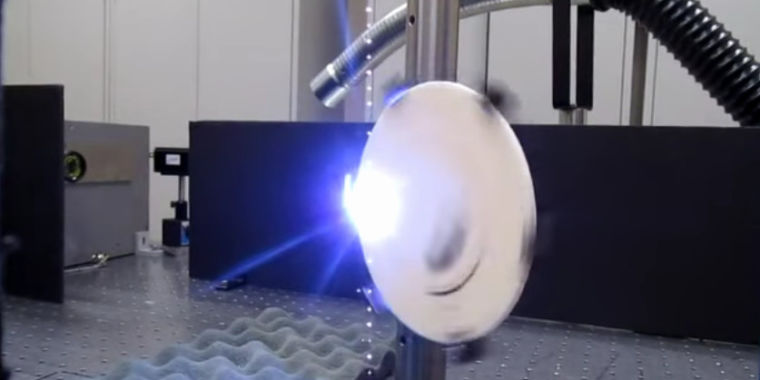
The Non-Lethal Laser-Induced Plasma Effect (NL-LIPE) system can be used to manipulate air molecules, creating a ball of plasma that oscillates to create sound waves with a stream of femtosecond-long laser bursts. A first laser creates the plasma ball, and a second then oscillates the plasma ball to create the sound. As Defense One’s Patrick Tucker reports, the current Laser-Induced Plasma Effect implementation can only manage an indistinguishable mumble—though it can create a wide variety of very distinguishable sounds, as demonstrated in the video below.
Mar. 16, 2018

Throughout last year, mysterious ailments struck dozens of U.S. andCanadian diplomats and their families living in Cuba. Symptoms includeddizziness, sleeplessness, headache, and hearing loss; many of the afflictedwere in their homes or in hotel rooms when theyheard intense, high-pitched sounds shortly before falling ill. In February, neurologists who examined the diplomats concluded that the symptoms were consistent with concussion, but without any blunt trauma to the head.
Mar. 16, 2018

In August, a petrochemical company with a plant in Saudi Arabia was hit by a new kind of cyberassault. The attack was not designed to simply destroy data or shut down the plant, investigators believe. It was meant to sabotage the firm’s operations and trigger an explosion.
Source: nytimes.com
Mar. 12, 2018

The US Navy submarines USS Connecticut and USS Hartford are meeting the British Royal Navy sub HMS Trenchant under an ice floe on the Arctic Sea. The subs, each with a crew of more than 100 sailors, combined are bringing along scores of researchers from government agencies and universities.
Source: vice.com
Mar. 7, 2018

Google, which has made strides in applying its proprietary deep learning tools to improve language translation, and vision recognition, has a cross-team collaboration within the company to work on the AI drone project.
Source: theintercept.com
Mar. 6, 2018
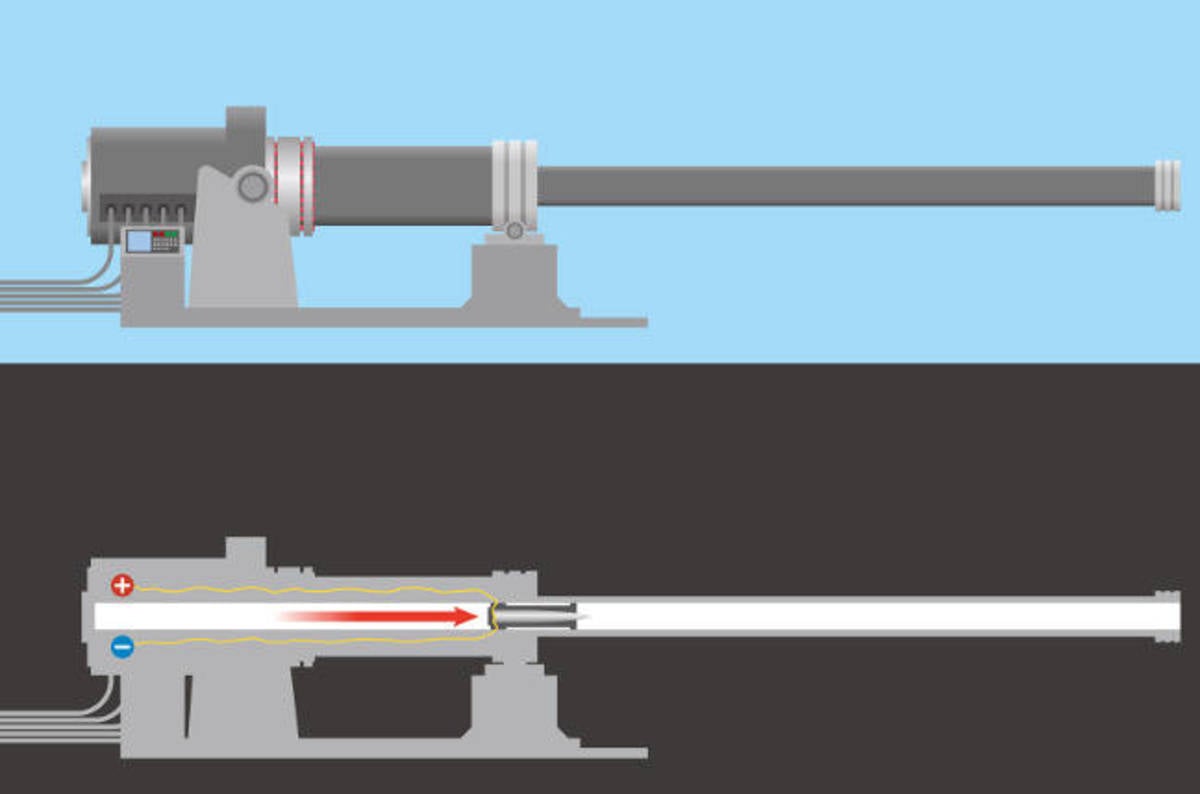
A Chinese firm’s buyout of a British semiconductor company may have directly led to China developing railgun weaponry and electromagnetic aircraft carrier catapults for its navy, according to reports.
Source: co.uk
Mar. 5, 2018

Yesterday’s bizarrely ominous presentation by Russian Vladimir Putin, where he showcased six super weapons that will supposedly give Russia an asymmetric edge over its potential foes—namely the United States—is still reverberating throughout the national security community. After we posted our master recap of the event and the weapons concepts featured in it, we and our incredible discussion crew here at The War Zone went to work dissecting what was presented in an attempt to parse fact from fiction.
Mar. 3, 2018

Successful or not, if Russia is test flying these weapons, this means it has been repeatedly crashing nuclear reactors into the ground or the ocean.
Source: thedrive.com
Mar. 3, 2018
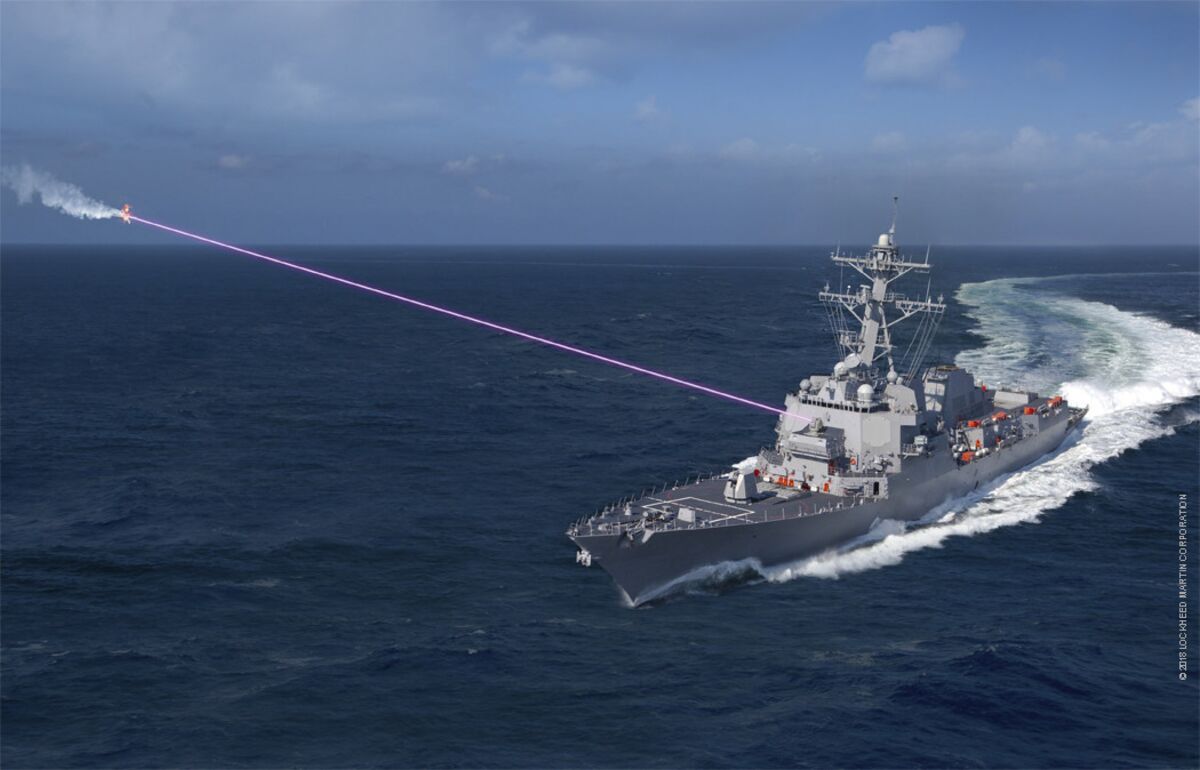
A $150 million Lockheed contract will allow destroyers to use Star Wars technology against smaller targets.
Source: bloomberg.com
Mar. 3, 2018
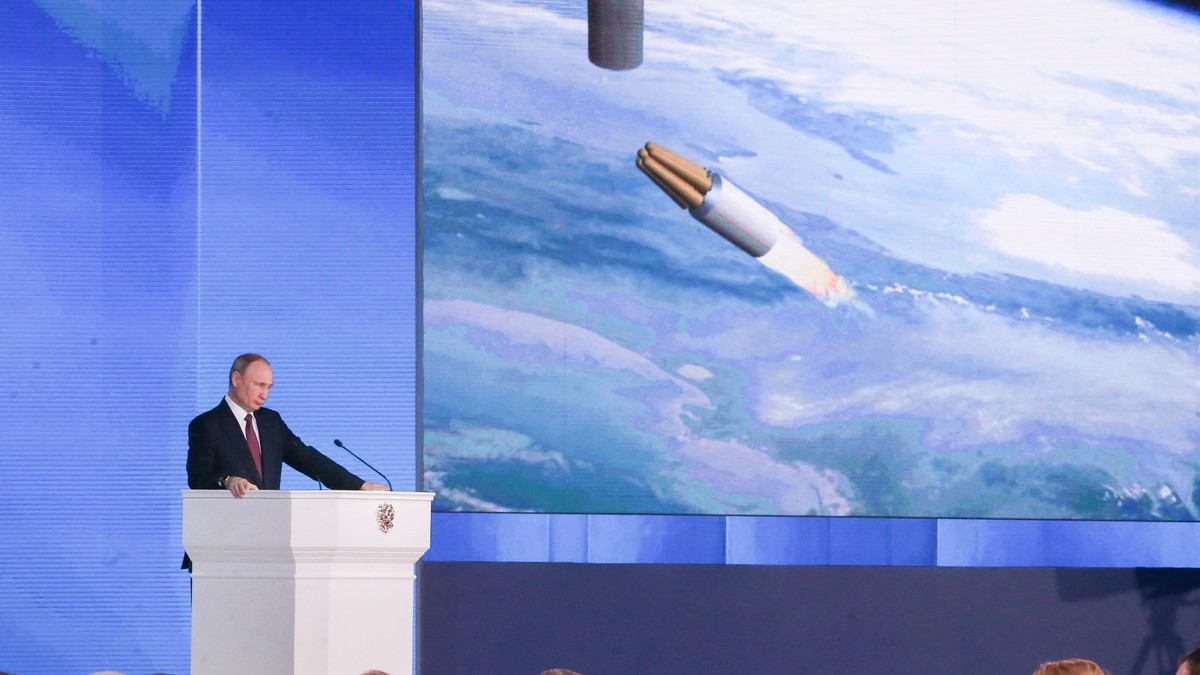
The animation, which Putin presented as part of the Russian president’s annual state-of-the-union-style address, features five weapons. The Samrat intercontinental ballistic missile, the Project 4202 hypersonic glide vehicle, a long-range torpedo and the Kinzhal air-to-surface missile have all been in development for years. And the United States is developing, or already possesses, rough analogues to each.
Source: vice.com