Feb. 8, 2019

A scammer was found to be manually abusing YouTube’s automated copyright system in an effort to hold YouTube channels ransom. By submitting multiple fake copyright “flags” on videos, the scammer was able to bring at least two YouTube accounts to the brink of automatic deactivation under YouTube’s “three strikes” policy, even getting past YouTube employees who double-checked the suspicious claim. According to YouTube, anti-abuse teams initially identified the requests as suspicious and asked for more information.
Feb. 2, 2019

Back in 2011, when the venture capitalist Marc Andreessen said that “software is eating the world,” it was still a fresh idea. Now it’s obvious that software permeates our lives. From complex electronics like medical devices and autonomous vehicles to simple objects like Internet-connected lightbulbs and thermometers, we’re surrounded by software.
And that means we’re all more exposed to attacks on that software than everbefore. Every year, 111 billion lines are added to the mass of software code in existence, and every line presents a potential new target. Steve Morgan, founder and editor in chief at the research firm Cybersecurity Ventures, predicts that system break-ins made through a previously unknown weakness—what the industry calls “zero-day exploits”—will average one per day in the United States by 2021, up from one per week in 2015.
Jan. 29, 2019

The question of who controls the ability to merge code changes into Bitcoin Core’s GitHub repository tends to come up on a recurring basis. This has been cited as a “central point of control” of the Bitcoin protocol by various parties over the years, but I argue that the question itself is a red herring that stems from an authoritarian perspective—this model does not apply to Bitcoin. It’s certainly not obvious to a layman as to why that is the case, thus the goal of this article is to explain how Bitcoin Core operates and, at a higher level, how the Bitcoin protocol itself evolves.
Jan. 27, 2019

Newly leaked internal documents obtained by Motherboard detail how Instagram polices content published through its Instagram Stories feature, which allows users to publish short videos and static images that generally stay on profiles for 24 hours. The fact that they often have multiple discrete parts can make it particularly difficult to moderate stories, the documents show. In particular, the documents show how Instagram’s moderators have to grapple with the context of a story.
Jan. 27, 2019

You’ve decided to tackle a high-end luxury apartment, the kind of building with multiple Picassos in the penthouse. You could spend weeks or months casing the place, studying every resident’s schedule, analyzing the locks on all the doors. You could dig through trash for hints about which units have alarms, run through every permutation of what the codes might be.
Or you could also just steal the super’s keys. According to a Justice Department indictment Thursday, that is effectively what China has done to the rest of the world since 2014. That’s when the country’s elite APT10—short for “advanced persistent threat”—hacking group decided to target not just individual companies in its long-standing efforts to steal intellectual property, but instead focus on so-called managed service providers.
Jan. 27, 2019

A couple of researchers demonstrated how to bypass vein based authentication using a fake hand build from a photo. If you consider vein based authentication totally secure, you have to know that a group of researchers demonstrated the opposite at the Chaos Communication Congress hacking conference. Vein based authentication scan invisible vein pattern (i.e. shape, size, and position of a user’ s veins) of the palm, back of the hand, fingers, etc, to identify the user.
Jan. 7, 2019

The US National Security Agency will release a free reverse engineering tool at the upcoming RSA security conference that will be held at the start of March, in San Francisco. The software’s name is GHIDRA and in technical terms, is a disassembler, a piece of software that breaks down executable files into assembly code that can then be analyzed by humans. The NSA developed GHIDRA at the start of the 2000s, and for the past few years, it’s been sharing it with other US government agencies that have cyber teams who need to look at the inner workings of malware strains or suspicious software.
Dec. 29, 2018

US-based PNC Bank is in the middle of a pilot project that aims to test out credit cards with constantly changing card verification values (or CVVs) to reduce online credit card fraud. The dynamic CVV is displayed on the back of such a card in e-ink, and changes according to an algorithm supplied by Visa. Services like Apple Pay and Google Pay try to combat online card theft by using tokenization to obscure a person’s card numbers from theft while online.
Dec. 15, 2018

Computer peripheral giant Logitech has finally issued a patched version of its Logitech Options desktop app, after being taken to task for a months-old security flaw. The bug could of allowed adversaries to launch keystroke injection attacks against Logitech keyboard owners that used the app. Google Project Zero security researcher Tavis Ormandy found the bug in September and publicly disclosed the vulnerability this week.
Dec. 15, 2018

Cybersecurity researchers have discovered a critical vulnerability in widely used SQLite database software that exposes billions of deployments to hackers. Dubbed as ‘Magellan’ by Tencent’s Blade security team, the newly discovered SQLite flaw could allow remote attackers to execute arbitrary or malicious code on affected devices, leak program memory or crash applications.
Source: thehackernews.com
Dec. 10, 2018

Two months after disclosing an error that exposed the private profile data of almost 500,000 Google+ users, Google on Monday revealed a new leak that affects more than 52 million people. The programming interface bug allowed developers to access names, ages, email addresses, occupations, and a wealth of other personal details even when they were set to be nonpublic. The bug was introduced in a release that went live at an undisclosed date in November and was fixed a week later, Google officials said in a blog post.
Dec. 9, 2018

Ericsson has confirmed that a fault with its software was the source of yesterday’s massive network outage, which took millions of smartphones offline across the UK and Japan and created issues in almost a dozen countries. In a statement, Ericsson said that the root cause was an expired certificate, and that ‘the faulty software that has caused these issues is being decommissioned.’ The statement notes that network services were restored to most customers on Thursday, while UK operator O2 said that its 4G network was back up as of early Friday morning.
Dec. 9, 2018

Purchased for almost $1 million on LedgerX’s trading platform just days after Bitcoin peaked a year ago, the call options have a strike price of $50,000 and an expiry date of Dec. 28, 2018. For the contracts to retain any value at expiry, Bitcoin would need to rally more than 1,400 percent. The options’ almost certain wipeout is a less-than-ideal outcome for the buyer, but it may not be quite as bad as it seems.
Dec. 9, 2018

This wouldn’t be a big deal, as the web is fraught with this kind of malicious sites, but these websites aren’t abusing some new never-before-seen trick, but a Firefox bug that Mozilla engineers appear to have failed to fix in the 11 years ever since it was first reported back in April 2007. The bug narrows down to a malicious website embedding an iframe inside their source code. The iframe makes an HTTP authentication request on another domain.
Dec. 9, 2018

One small crypto programming error can lead to millions in lost funds. As you are about to learn, a bug in your code can equal disaster on the blockchain. These far-reaching consequences are all the more reason to make your project open-source.
Open-source projects gain added security because of the large number of developers checking the code for errors. That being said, even open-source projects contain programming mistakes. Let’s take a moment to examine the five biggest crypto programming errors in history.
Dec. 8, 2018

Transaction privacy is a fundamental requirement for many kinds of financial services, and the inability to provide this privacy has prevented Ethereum from providing compelling alternatives to traditional financial instruments. There are several blockchains and blockchain projects that use cryptographic techniques to provide this privacy, but this privacy is reserved for the ‘native’ cryptocurrency of the blockchain in question. This transaction privacy is not accessible for digital assets built on top of blockchain protocols.
Dec. 8, 2018

Telephone pitchers, online scammers and even family members target the most vulnerable among us. And it’s about to get worse. Marjorie Jones trusted the man who called to tell her she’d won a sweepstakes prize, saying she could collect the winnings once she paid the taxes and fees.
After she wired the first payment, he and other callers kept adding conditions to convince her to send more money. As the scheme progressed, Jones, who was legally blind and lived alone in a two-story house in Moss Bluff, Louisiana, depleted her savings, took out a reverse mortgageand cashed in a life insurance policy. She didn’t tell her family, not even the sister who lived next door.
Dec. 4, 2018

Kubernetes has become the most popular cloud container orchestration system by far, so it was only a matter of time until its first major security hole was discovered. And the bug, CVE-2018-1002105, aka the Kubernetes privilege escalation flaw, is a doozy. It’s a CVSS 9.8 critical security hole.
CVSS 9.8 critical security hole. With a specially crafted network request, any user can establish a connection through the Kubernetes application programming interface (API) server to a backend server. Once established, an attacker can send arbitrary requests over the network connection directly to that backend.
Nov. 29, 2018
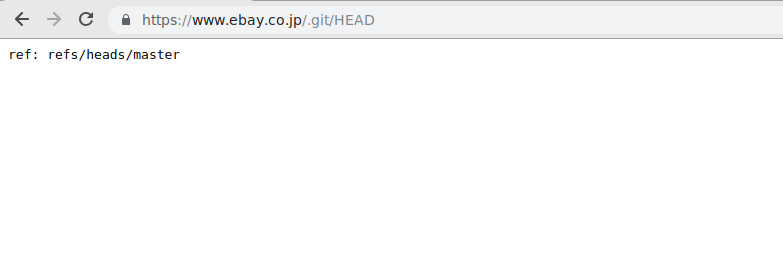
Today I wanna write about a finding I discovered during a research project where the aim was to find critical vulnerabilities in Alexa Top 1 Million websites. The main focus was to discover common configuration issues which do not require sophisticated exploits, which are easy to find and which can have a high impact on businesses. Some results of this research were presented at ITSECX 2018, an Austrian IT-Security conference.
Nov. 28, 2018

The FBI has started deploying its own hacking techniques to identify financially-driven cybercriminals, according to court documents unearthed by Motherboard. The news signals an expansion of the FBI’s use of tools usually reserved for cases such as child pornography and bomb threats. But it also ushers in a potential normalization of this technologically-driven approach, as criminal suspects continually cover up their digital trail and law enforcement have to turn to more novel solutions.