Nov. 28, 2018

Why x86 won’tsurvivex86 is a micro-architecture created by Intel that has been around since 1978. It powers most laptops, and more than likely powers the one you’re using right now. It’s considered powerful, effective, and reliable… until a few months ago.
A short history of leaks and exploits found in the x86 micro-architecture found in 2018 alone:- Meltdown,- Spectre,- SMT/Hyper threading found to be a security threat. Seems like a small amount, right? No.
Nov. 24, 2018

Secret Service cracks down on credit card skimming at gas pumps nationwide The agency recovers about 20 to 30 skimmers a week, with the average skimmer having information from about 80 cards on it, according to one agent. The U.S. Secret Service said it is kicking off the holiday season with a nationwide initiative to crack down on credit card skimming devices installed at gas stations. The operation, called “Operation Deep Impact,” was launched on Thanksgiving Day and is set to coincide with an increased demand for fuel over the holidays.
Nov. 23, 2018

Google is tracking you. Even when you’re in Airplane Mode. It knows when you get out the car.
When you’re walking. We now have proof. Google has been secretly tracking people against their wishes.
The company has been collecting Android users’ location data, even when they’ve actively disabled location services. It’s an extremely concerning discovery, which means that Google can pinpoint exactly where you are even when you go out of your way to hide this information.
Nov. 22, 2018
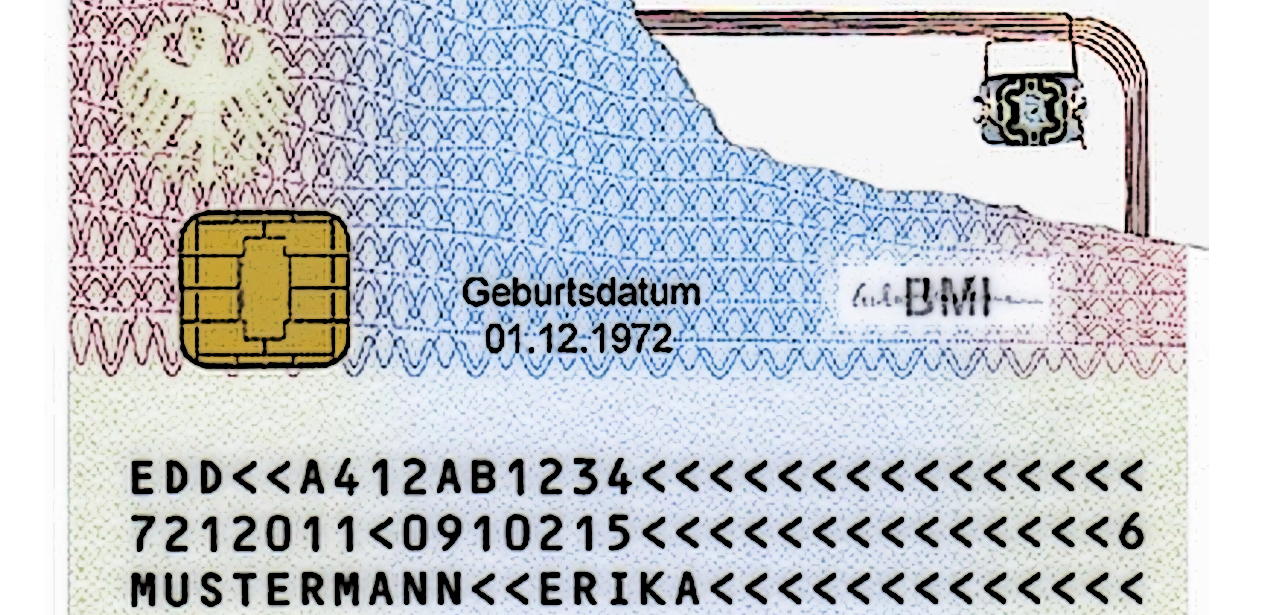
German identity cards issued since 2010 come with a radio frequency identification chip that stores information about the holder. This includes name, date of birth and a biometric picture. If the holder so chooses, it can also store their fingerprints.
The new cards are machine-readable and can be used as travel documents in most countries in Europe, as well as for authentication into online government services (tax, mail) or for age verification. Authentication via the RFID chip is possible using a smartcard reader and an eID client application that communicates with the RFID chip and an authentication server to validate the login data. To prevent tampering with the ID card data, the authentication server checks the validity of the information and then signs its reply, so that the web service can trust the legitimacy of the data received.
Nov. 21, 2018

CDC is advising that U.S. consumers not eat any romaine lettuce, and retailers and restaurants not serve or sell any, until we learn more about the outbreak. This investigation is ongoing and the advice will be updated as more information is available. Consumers who have any type of romaine lettuce in their home should not eat it and should throw it away, even if some of it was eaten and no one has gotten sick.
Nov. 20, 2018

Snowden and Cambridge Analytica have put France off Silicon Valley giants. It’s a change of heart that could have global ramifications France is working hard to avoid becoming a digital colony of the US or China. Last month, both the French National Assembly and the French Army Ministry declared that their digital devices would stop using Google as their default search engines.
Nov. 19, 2018
The YouTube algorithm that I helped build in 2011 still recommends the flat earth theory by the hundreds of millions. This investigation by @RawStory shows some of the real-life consequences of this badly designed AI.
Source: threader.app
Nov. 18, 2018

According to the message, a hacker going by the name AmFearLiathMormakes quite a few interesting claims such as hacking ProtonMail’sservices and stealing user’s email, that ProtonMail is sending their user’s decrypted data to American servers, and that ProtonMail is abusing the lack of Subresource Integrity (SRI) use to purposely and maliciously steal their user’s passwords.
Source: bleepingcomputer.com
Nov. 16, 2018

Chip designer Nvidia Corp on Thursday forecast disappointing sales for the holiday quarter, pinning the blame on unsold chips piling up with distributors and retailers after the evaporation of the cryptocurrency mining boom. The Santa Clara, California-based company also posted sales that missed expectations for its third quarter. Shares plunged nearly 17 percent in late trading to $168.32.
For decades, Nvidia has supplied gaming cards to boost computer graphics, but in recent years cryptocurrency miners adopted the company’s cards to turn bits into wealth.
Nov. 14, 2018
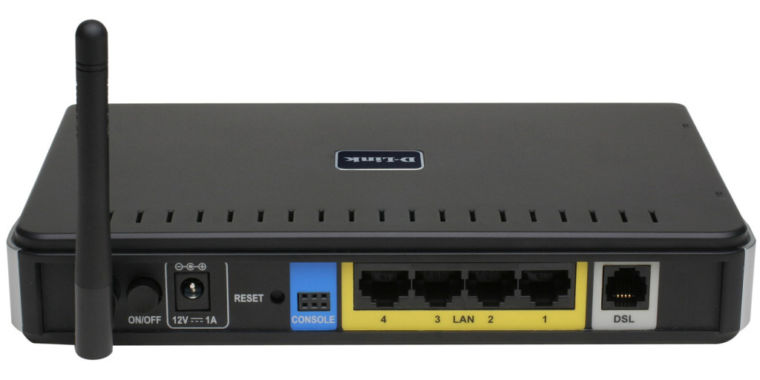
A recently discovered botnet has taken control of an eye-popping 100,000 home and small-office routers made from a range of manufacturers, mainly by exploiting a critical vulnerability that has remained unaddressed on infected devices more than five years after it came to light. Researchers from Netlab 360, who reported the mass infection late last week, have dubbed the botnet BCMUPnP_Hunter. The name is a reference to a buggy implementation of the Universal Plug and Play protocol built into Broadcom chipsets used in vulnerable devices.
Nov. 14, 2018

Google lost control of several million of its IP addresses for more than an hour on Monday in an event that intermittently made its search and other services unavailable to many users and also caused problems for Spotify and other Google cloud customers. While Google said it had no reason to believe the mishap was a malicious hijacking attempt, the leak appeared suspicious to many, in part because it misdirected traffic to China Telecom, the Chinese government-owned provider that was recently caught improperly routing traffic belonging to a raft of Western carriers though mainland China. Further ReadingStrange snafu misroutes domestic US Internet traffic through China TelecomThe leak started at 21:13 UTC when MainOne Cable Company, a small ISP in Lagos, Nigeria, suddenly updated tables in the Internet’s global routing system to improperly declare that its autonomous system 37282 was the proper path to reach 212 IP prefixes belonging to Google.
Nov. 14, 2018

A large chunk of the hijacked traffic passed through the network of a controversial Chinese state-owned telecom provider that was previously accused of intentionally misdirecting internet traffic. A tiny Nigerian ISP has hijacked internet traffic meant for Google’s data centers. The incident, called a BGP hijack, occurred yesterday, on November 12, between 13:12 and 14:35, Pacific time, according to Google.
The incident was first detected and reported by BGPmon, an online service that monitors the routes that internet traffic takes through the smaller internet service provider (ISP) networks that make up the larger internet. According to BGPmon, the incident was caused by a small Nigerian ISP named MainOne Cable Company (AS37282), which announced to nearby ISPs that it was hosting IP addresses that were normally assigned to Google’s data center network. BGPmon says the Nigerian ISP incorrectly announced it was hosting 212 Google network prefixes in five different waves, for a total of 74 minutes.
Nov. 12, 2018

Britain’s biggest employer organisation and main trade union body have sounded the alarm over the prospect of British companies implanting staff with microchips to improve security. UK firm BioTeq, which offers the implants to businesses and individuals, has already fitted 150 implants in the UK. The tiny chips, implanted in the flesh between the thumb and forefinger, are similar to those for pets.
Nov. 10, 2018
The recent low in cryptocurrency morale has given our community a rich opportunity for reflection. The vast majority of us crypto enthusiasts have a genuine heart for marrying technology and social action, and I believe it’s time we reflect on where we wanted to go with digital currencies, honestly take stock of the state of blockchain technology today, and rigorously plan how to improve digital currencies moving forward. I’ve been fortunate enough to sit in on many lectures discussing blockchain technologies and incentive structures in computer science at Stanford University, and it’s led me to the conclusion that crypto incentives have driven a lust for global consensus which obscures the important goals we originally had in mind.
Nov. 7, 2018

VirtualBox E1000 Guest-to-Host Escape. Contribute to MorteNoir1/virtualbox_e1000_0day development by creating an account on GitHub. Vulnerable software: VirtualBox 5.2.20 and prior versions.
Host OS: any, the bug is in a shared code base. VM configuration: default (the only requirement is that a network card is Intel PRO/1000 MT Desktop (82540EM) and a mode is NAT). Until the patched VirtualBox build is out you can change the network card of your virtual machines to PCnet (either of two) or to Paravirtualized Network.
Nov. 6, 2018

A widespread scam pretending to be from ElonMusk and utilizing a stream of hacked Twitter accounts andfake giveaway sites has earned scammers over 28 bitcoins or approximately $180,000 in a single day. This scam is being pulled off by attackers hacking into verified Twitter accounts and then changing the profile name to ‘Elon Musk’. They then tweet out that he, being Elon, is creating the biggest crypto-giveaway of 10,000 bitcoins.
Nov. 5, 2018

Despite the high quality of supportive tools in the field of security testing, this is still unknown territory for many development projects and therefore still has some unused potential. Christian Schneider’s session at DevOpsCon 2017 offers a well-rounded overview of the open-source tools used by security professionals and penetration testers in their daily work on the detection of security vulnerabilities. Presented from the perspective of a fictitious web application penetration test, this session will provide you with a well-rounded overview of the open-source tools used by security professionals and penetration testers in their daily work on the detection of security vulnerabilities.
Oct. 31, 2018

What are the flaws inherent in both Proof-of-Work and Proof-of-Stake that make Proof-of-Signature an ideal alternative? A short explanation is given below. How does Bitcoin validate transactions and deter denial of service attacks?
It requires a transaction-requesting entity to perform computational work. Inessence, it makes data creation difficult for users but data verification easy for the network. This system is known as Proof-of-Work, a well-known protocol used throughout much of the cryptocurrency world.
Oct. 27, 2018

A Chinese state-owned telecommunications company has been ‘hijacking the vital internet backbone of western countries,’ according to an academic paper published this week by researchers from the US Naval War College and Tel Aviv University. The culprit is China Telecom, the country’s third-largest telco and internet service provider (ISP), which has had a presence inside North American networks since the early 2000s when it created its first point-of-presence (PoP). PoPs are data centers that do nothing more than re-route traffic between all the smaller networks that make up the larger internet.
Oct. 27, 2018

Walking around downtown Orlando, you might not notice the lightbulb-sized camera affixed to one of the traffic signal poles along the city’s palm tree–studded avenues. But it’s there, scanning all the same. If it sees you, the camera will instantly send a live video feed over to Amazon’s facial “Rekognition” system, cross-referencing your face against persons of interest.