May. 18, 2019

Google’s Titan Security Key, launched in the U.S. market last August, is a USB dongle that offers an added layer of security features for Google accounts, such as two-factor authentication and protections from phishing attacks. Specifically impacted is the version of the Titan Security Key with Bluetooth Low Energy (BLE) – not the NFC version of the security keys. The vulnerability stems from a misconfiguration in the Titan Security Keys’ Bluetooth pairing protocols, said Brand.
May. 18, 2019

Cisco is warning of critical remote code-execution (RCE) vulnerabilities in the Cisco Prime Infrastructure (PI) and Evolved Programmable Network (EPN) Manager, which is used by telcos, mobile carriers, cable companies and ISPs to manage their hardware infrastructure. The vendor also issued estimated bug-fix dates for an unpatched, high-severity Secure Boot flaw that was disclosed on Monday; and addressed a high-severity flaw that would allow arbitrary code-execution on WebEx for Windows, Cisco’s widely deployed web conferencing and collaboration software. The newly disclosed critical issue consists of multiple vulnerabilities in the web-based management interface of the PI EPN manager, which could allow a remote attacker to execute arbitrary code with root privileges on the underlying operating system.
May. 18, 2019

The web skimming script was recently found stealing payment data on the websites of Forbes Magazine as well as seven others. The payment card-siphoning Magecart group has struck again; this time injecting web-skimming scripts into the subscription website for the Forbes print magazine (as well as a slew of others over the past week). The script, which has since been removed, was discovered on the subscription page of the Forbes Magazine website on Wednesday, scraping up the payment data of subscribers.
May. 18, 2019

The hacker who breached Stack Overflow last week managed to access data on user accounts, the company said today in an update on its investigation into a security breach it disclosed last night. The update comes to shed some light into what happened on the company’s servers last week, after Stack Overflow left many users scratching their heads when it posted a very short message on Thursday, announcing a severe breach of its production systems. While it initially said that there was no evidence of the hacker accessing user data, the company changed its statement today.
May. 18, 2019

The German newspaper Der Spiegel revealed that the software company behind TeamViewer was compromised in 2016 by Chinese hackers. According to the media outlet, Chinese state-sponsored hackers used the Winnti trojan malware to infect the systems of the Company.
The Winnti group was first spotted by Kaspersky in 2013, according to the researchersthe gang has been active since 2007. The gang is financially-motivated and was mostly involved in cyber espionage campaigns. The hackers were known for targeting companies in theonline gaming industry, the majority of the victims is located in Southeast Asia.
May. 11, 2019

For three years, some Alpine Linux Docker images have shipped with a root account and no password, opening the door for attackers to easily access vulnerable servers and workstations provisioned for the images. Affected versions of Alpine Linux Docker distros include 3.3, 3.4, 3.5, 3.6, 3.7, 3.8 and 3.9 Alpine Docker Edge, according to Cisco Talos researchers who discovered the bug,tested each version and released their findings on Wednesday. Vulnerable images of Alpine Linux Dockers were available via the official Docker Hub portal since late 2015.
May. 11, 2019

Since December 2015, Alpine Linux Docker images have been shipped with hardcoded credentials, a NULL password for the root user. The NULL password for the root account was included in the Official Alpine Linux Docker images since v3.3. The bug received a CVSS score of 9.8, it affects Alpine Docker versions 3.3 to 3.9, including Alpine Docker Edge.
The issue wasfirst reported in August 2015 and patched in November, evidently, it was re-introducedin December 2015. The NULL passoword is present in the/etc/shadowfile of the affected builds of the Alpine Docker Image.
May. 7, 2019

Chinese intelligence agents acquired National Security Agency hacking tools and repurposed them in 2016 to attack American allies and private companies in Europe and Asia, a leading cybersecurity firm has discovered. The episode is the latest evidence that the United States has lost control of key parts of its cybersecurity arsenal. Based on the timing of the attacks and clues in the computer code, researchers with the firm Symantec believe the Chinese did not steal the code but captured it from an N.S.A. attack on their own computers — like a gunslinger who grabs an enemy’s rifle and starts blasting away.
May. 5, 2019

A critical vulnerability in Cisco’s software-defined networking (SDN) software could allow an unauthenticated, remote attacker to connect to a vulnerable data-center switch and take it over, with the privileges of the root user. The bug (CVE-2019-1804), which has a CVSS severity rating of 9.8 out of 10, exists in the Cisco Nexus 9000 Series Application Centric Infrastructure (ACI) Mode Switch Software, which is part of Cisco’s SDN approach. Enterprises use ACI to deploy and control applications across their infrastructure, including their multicloud footprints, with consistent policies – in theory boosting security and high availability.
May. 5, 2019

Hundreds of developers have had had Git source code repositories wiped and replaced with a ransom demand. The attacks started earlier today, appear to be coordinated across Git hosting services (GitHub, Bitbucket, GitLab), and it is still unclear how they are happening. What it is known is that the hacker removes all source code and recent commits from vitcims’ Git repositories, and leaves a ransom note behind that asks for a payment of 0.1 Bitcoin (~$570).
May. 4, 2019

On Monday, February 11, CVE-2019-5736 was disclosed. This vulnerability is a flaw in runc, which can be exploited to escape Linux containers launched with Docker, containerd, CRI-O, or any other user of runc. But how does it work?
Dive in! Processes interact with the operating system to perform a variety of operations (for example, reading and writing files, taking input, communicating on the network, etc.) via system calls, or syscalls. Syscalls can perform a variety of actions.
Apr. 28, 2019

On Thursday, April 25th, 2019, we discovered unauthorized access to a single Docker Hub database storing a subset of non-financial user data. Upon discovery, we acted quickly to intervene and secure the site. We want to update you on what we’ve learned from our ongoing investigation, including which Hub accounts are impacted, and what actions users should take.
During a brief period of unauthorized access to a Docker Hub database, sensitive data from approximately 190,000 accounts may have been exposed (less than 5% of Hub users). Data includes usernames and hashed passwords for a small percentage of these users, as well as GitHub and Bitbucket tokens for Docker autobuilds. We are asking users to change their password on Docker Hub and any other accounts that shared this password.
Mar. 6, 2019

Ghidra is a software reverse engineering (SRE) framework developed by NSA’s Research Directorate for NSA’s cybersecurity mission. It helps analyze malicious code and malware like viruses, and can give cybersecurity professionals a better understanding of potential vulnerabilities in their networks and systems.
Source: nsa.gov
Mar. 2, 2019

We’re used to thinking of computer processors as orderly machines that proceed from one simple instruction to the next with complete regularity. But the truth is, that for decades now, they’ve been doing their tasks out of order and just guessing at what should come next. They’re very good at it, of course.
So good in fact, that this ability, called speculative execution, has underpinned much of the improvement in computing power during the last 25 years or so. But on 3 January 2018, the world learned that this trick, which had done so much for modern computing, was now one of its greatest vulnerabilities. Throughout 2017, researchers at Cyberus Technology, Google Project Zero, Graz University of Technology, Rambus, University of Adelaide, and University of Pennsylvania, as well as independent researchers such as cryptographer Paul Kocher, separately worked out attacks that took advantage of speculative execution.
Mar. 2, 2019
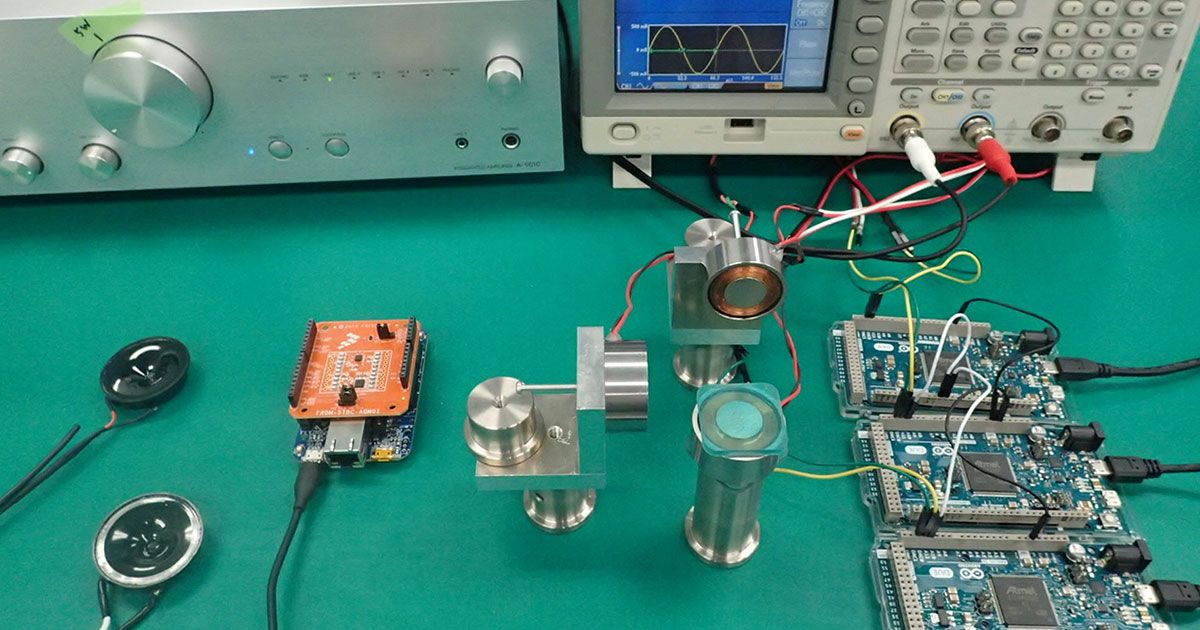
Sensor-based automatic control technology is now used in hundreds of applications as varied as vehicle accident prevention, agricultural monitoring, and self-balancing robots. But as sensor interaction with the environment increases to enable control systems to “see,”“listen,”and “sense”their environment more accurately, the potential for cyber attacks also grows. To counter this danger,Mitsubishi Electric has developed what it believes is the first sensor-security technology for detecting inconsistencies that appear in sensor measurementswhen a system is under attack.
Feb. 10, 2019

On Thursday, Bezos published emails in which the Enquirer’s parent company explicitly threatened to publish intimate photographs of Bezos and his mistress, which wereapparently exchanged between the two through their iPhones, unless Bezos agreed to a series of demands involving silence about the company’s conduct. In a perfect world, none of the sexually salacious material the Enquirer was threatening to release would be incriminating or embarrassing to Bezos: it involves consensual sex between adults that is the business of nobody other than those involved and their spouses. But that’s not the world in which we live: few news events generate moralizing interest like sex scandals, especially among the media.
Feb. 9, 2019

Troubled Canadian crypto exchange QuadrigaCX owes its customers $190 million and cannot access most of the funds, according to a court filing obtained by CoinDesk. In a sworn affidavit filed Jan. 31 with the Nova Scotia Supreme Court, Jennifer Robertson, identified as the widow of QuadrigaCX founder Gerald Cotten, said the exchangeowes its customers roughly $250 million CAD ($190 million) in both cryptocurrency and fiat. The company previously announced it hadfiled for creditor protectionon its website, but the filing itself provides greater details about its predicament.
Feb. 9, 2019

In January, Motherboard revealed that AT&T, T-Mobile, and Sprint were selling their customers’ real-time location data, which trickled down through a complex network of companies until eventually ending up in the hands of at least one bounty hunter. Motherboard was also able to purchase the real-time location of a T-Mobile phone on the black market from a bounty hunter source for $300. In response, telecom companies said that this abuse was a fringe case.
Feb. 9, 2019
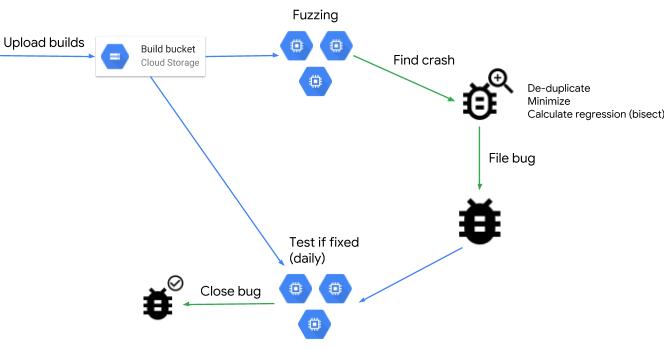
ClusterFuzz has found more than 16,000 bugs in Chrome and more than 11,000 bugs in over 160 open source projects integrated with OSS-Fuzz. It is an integral part of the development process of Chrome and many other open source projects. ClusterFuzz is often able to detect bugs hours after they are introduced and verify the fix within a day.
Source: googleblog.com
Feb. 8, 2019
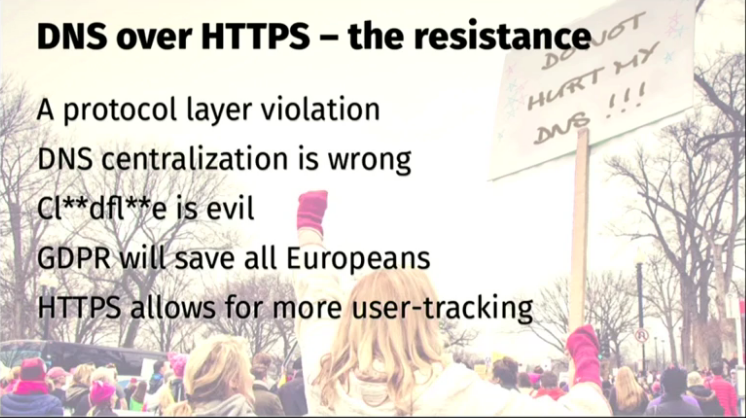
This weekend at the excellent FOSDEM gathering there were no less than three presentations on DNS over HTTPs. Daniel Stenberg presented a keynote session “DNS over HTTPS – the good, the bad and the ugly” (video), Vittorio Bertola discussed “The DoH Dilemma” while Daniel, Stéphane Bortzmeyer and I formed a DNS Privacy Panel expertly moderated by Jan-Piet Mens. I want to thank Daniel, Jan-Piet, Rudolf van der Berg, Stéphane & Vittorio for proofreading & improving this post, but I should add this does not imply an endorsement from anyone!