May. 16, 2018
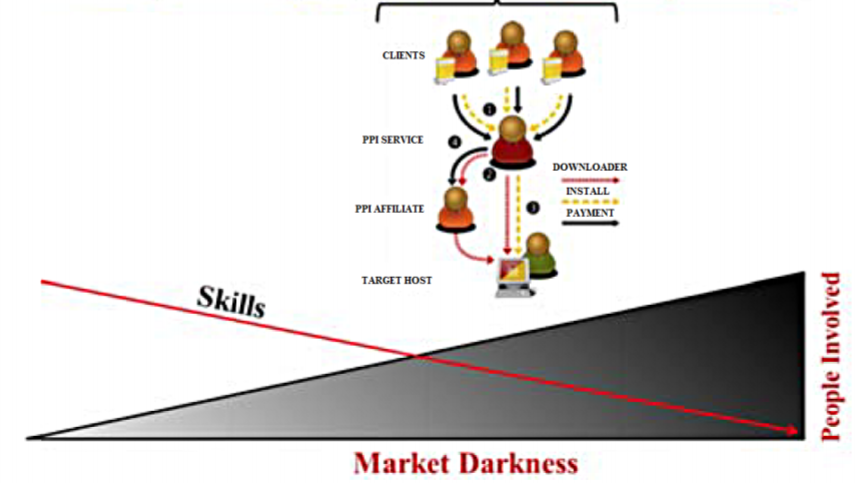
Botnets are shadowy networks of computers controlled by hidden actors and linked to everything thatâs bad on the web. They have been implicated in distributed denial-of-service attacks, spamming campaigns, click fraud, and bank fraud, to name just a few of the nastiest flavors of cybercrime. Clearly somebody, somewhere is making a fortune masterminding this kind of criminal activity.
Today we get an answer of sorts thank to the work of C.G.J. Putman at the University of Twente in the Netherlands and a couple of colleagues. âIt comes as no surprise that the primary motive for the use of botnets is for economic gain,â they say as they map out the costs and revenue streams. All that leads to a rough estimate of the cost of setting up a botnet on a national or international scale.
May. 15, 2018

Computer scientists have now invented a way to hide secret messages in ordinary text by imperceptibly changing the shapes of letters. The new technique, named FontCode, works with common font families such as Times Roman and Helvetica. It is compatible with most word-processing software, including Microsoft Word, as well as image-editing and drawing programs, such as Adobe Photoshop and Adobe Illustrator.
FontCode embeds data into texts using minute perturbations to components of letters. This includes changing the width of strokes, adjusting the height of ascenders and descenders, and tightening or loosening the curves in serifs and the bowls of letters such as o, p, and b. A kind of artificial-intelligence system known as a convolutional neural network can recognize these perturbations and help recover the embedded messages. The amount of information FontCode can hide is limited only by the number of letters on which it acts, the researchers say.
May. 15, 2018

Late in March 2018, ESET researchers identified an interesting malicious PDF sample. A closer look revealed that the sample exploits two previously unknown vulnerabilities: a remote-code execution vulnerability in Adobe Reader and a privilege escalation vulnerability in Microsoft Windows. The use of the combined vulnerabilities is extremely powerful, as it allows an attacker to execute arbitrary code with the highest possible privileges on the vulnerable target, and with only the most minimal of user interaction.
May. 15, 2018

Four of the largest cell giants in the US are selling your real-time location data to a company that you’ve probably never heard about before. In case you missed it, a senator last week sent a letter demanding the Federal Communications Commission (FCC) investigate why Securus, a prison technology company, can track any phone ‘within seconds’ by using data obtained from the country’s largest cell giants, including AT&T, Verizon, T-Mobile, and Sprint, through an intermediary, LocationSmart. The story blew up because a former police sheriff snooped on phone location data without a warrant, according The New York Times.
May. 15, 2018

Hackers—apparently working for the Turkish government— attempted to infect a large number of Turkish dissidents and protesters by spreading spyware on Twitter, according to a new report by digital rights organization Access Now. The organization’s researchers found seven new samples of spyware made by the infamous surveillance tech vendor FinFisher. One of them targeted several Turkish protesters who attended a large series of protests against the government of Recep Tayyip Erdoğan in June and July 2017, known as the March for Justice, according to the report.
May. 15, 2018
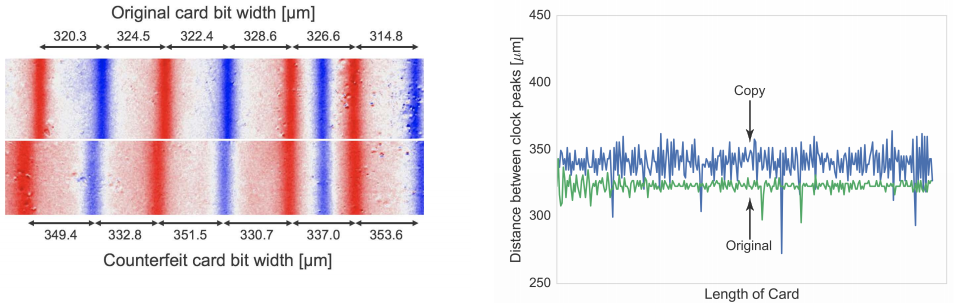
Researchers at the University of Florida found that account data encoded on legitimate cards is invariably written using quality-controlled, automated facilities that tend to imprint the information in uniform, consistent patterns. Cloned cards, however, usually are created by hand with inexpensive encoding machines, and as a result feature far more variance or “jitter” in the placement of digital bits on the card’s stripe. Gift cards can be extremely profitable and brand-building for retailers, but gift card fraud creates a very negative shopping experience for consumers and a costly conundrum for retailers.
May. 15, 2018

The new bunch of Spectre-like flaws revealed last week won’t be patched for at least 12 days. German outlet Heise, which broke news of the eight Spectre-like vulnerabilities last week has now reported that Intel wants disclosure of the flaws delayed until at least May 21. Last week, Heise noted that one participant in the planned coordinated release would include a Google Project Zero disclosure, which as far as The Register can discern has not yet happened.
May. 14, 2018

Here’s what happened: HSBC issued a letter of credit for U.S. food and agriculture firm Cargill to Dutch lender ING. The trade finance transaction involved a shipment of soybeans from Argentina to Malaysia. Using blockchain technology, this letter is stored on an open, distributed ledger where every transaction is visible to anyone with access to the system.
This eliminates the need for paper reconciliation and a long chain of digital (and paper) communication between the two parties. HSBC and ING said the exchange was performed in 24 hours, whereas it normally takes five to 10 days for such a transaction to go through traditional methods. HSBC used the “Corda” platform, which was developed by blockchain company R3.
May. 14, 2018

If you booked train tickets for a European getaway in the past few months, you might want to check your bank statements. Rail Europe, a site used by Americans to buy train tickets in Europe, has revealed a three-month data breach of credit cards and debit cards. The announcement came in a letter filed with the California attorney general, in which the company said hackers put credit card-skimming malware on its website between late-November 2017 and mid-February 2018.
May. 14, 2018

The EFAIL attacks exploit vulnerabilities in the OpenPGP and S/MIME standards to reveal the plaintext of encrypted emails. In a nutshell, EFAIL abuses active content of HTML emails, for example externally loaded images or styles, to exfiltrate plaintext through requested URLs. To create these exfiltration channels, the attacker first needs access to the encrypted emails, for example, by eavesdropping on network traffic, compromising email accounts, email servers, backup systems or client computers.
May. 14, 2018

Ethereum developers have long known that scaling the network is a subject worth discussion and investment. The matter did not quite spill out from the developer community, however, until late 2017, when a decentralized application (dApp) named CryptoKitties attracted so much traffic it began slowing down the network. On top of network latency, the price of gas—the fee required to run each operation within a contract on the Ethereum blockchain—soared as users competed for their transactions to be validated.
May. 14, 2018
The Internet’s two most widely used methods for encrypting e-mail–PGP and S/Mime–are vulnerable to hacks that can reveal the plaintext of encrypted messages, a researcher warned late Sunday night. He went on to say there are no reliable fixes and to advise anyone who uses either encryption standard for sensitive communications to remove them immediately from e-mail clients. Little is publicly known about the flaws at the moment.
May. 14, 2018

THE ACCC is investigating accusations Google is using as much as $580 million worth of Australians’ phone plan data annually to secretly track their movements. Australian Competition and Consumer Commission chairman Rod Sims said he was briefed recently by US experts who had intercepted, copied and decrypted messages sent back to Google from mobiles running on the company’s Android operating system. The experts, from computer and software corporation Oracle, claim Google is draining roughly one gigabyte of mobile data monthly from Android phone users’ accounts as it snoops in the background, collecting information to help advertisers.
May. 14, 2018

Malware has harvested payment card details from some Chili’s restaurants, Brinker International, the company behind the restaurant chain announced on Friday. Brinker says it detected the malware on Friday, May 11, the same day it made the announcement. The company said it is still investigating the incident together with law enforcement and third-party forensic experts.
Based on the current details it was able to gather, the company said the malware appears to have infected some of its payment systems from where it gathered credit or debit card numbers and cardholder names. The company did not publish a list of Chili’s restaurants on whose network it found the malware but said the evidence suggests the malware was only active between March and April 2018. Brinker also didn’t provide an approximate number of affected customers but promised to publish more details as the investigation goes forward.
May. 13, 2018

Microsoft has released a patch for this vulnerability, and we strongly advise to apply it, as it is just a matter of time before other threat actors start leveraging this new opportunity in spam or exploit kit campaigns. In late April, two security companies (Qihoo360 and Kaspersky) independently discovered a zero-day for Internet Explorer (CVE-2018-8174), which was used in targeted attacks for espionage purposes. This marks two years since a zero-day has been found (CVE-2016-0189 being the latest one) in the browser that won’t die, despite efforts from Microsoft to move on to the more modern Edge.
May. 13, 2018

German Radoslav Albrecht has founded an online bank that allows clients to transfer loans anywhere in the world using Bitcoin. Bitbond uses cryptocurrencies like Bitcoin to bypass the Swift international transfer system to lend money across the globe rapidly and at low cost. Clients hold the loans in digital tokens like Bitcoin only for seconds or minutes until they are exchanged back into the currency of the country where they wish to receive the funds, avoiding the crypto currencies fluctuating exchange rates.
May. 13, 2018

Psychic Zoe has not had a very good week. On 9 May the fortune-teller, whose real name is Ann Thompson, was arrested by the New York Police Department on suspicion of defrauding clients out of over $800,000. You’d think she might have had a premonition the police would be knocking at her door but, alas, the future isn’t always crystal clear.
May. 12, 2018
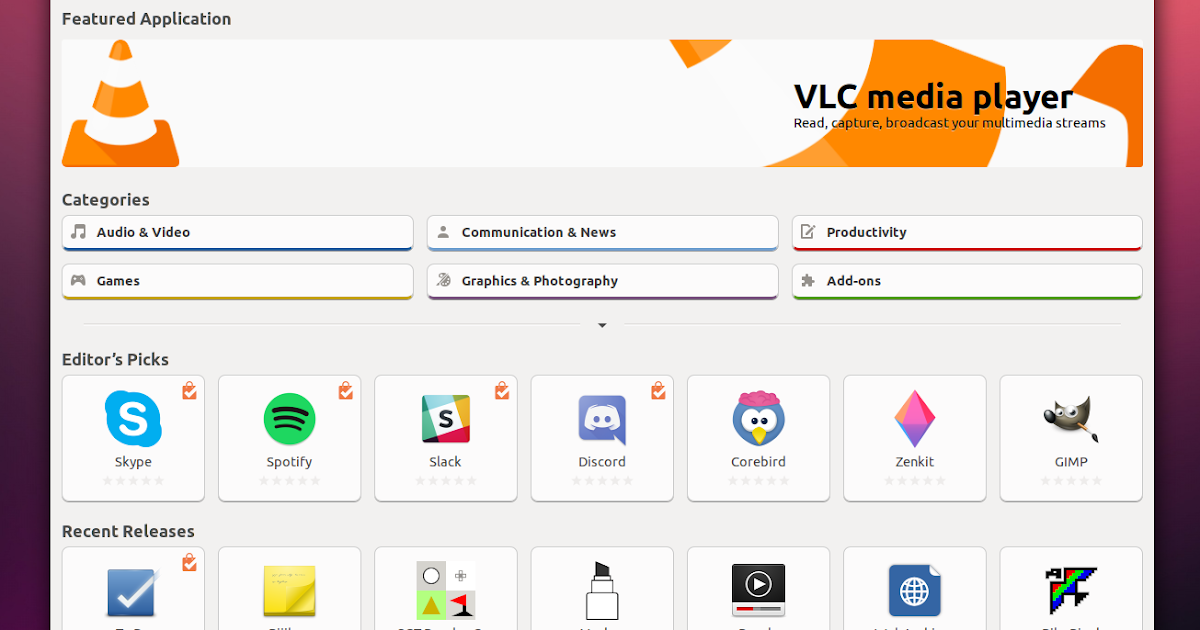
Oh, snap! Just because some packages are available to install directly from the Ubuntu Software Center doesn’t make them safe. This is proved by a recent discovery of malware in some snap packages from the Ubuntu Snaps Store.
At least two of the snap packages, 2048buntu and Hextris, uploaded to the Ubuntu Snaps Store by user Nicolas Tomb, contained malware. All packages by Nicolas have since been removed from the Ubuntu Snaps Store, ‘pending further investigations’.
May. 12, 2018

A few weeks ago, I came across a vulnerability that affected all current versions of Electron at the time (< 1.7.13, < 1.8.4, and < 2.0.0-beta.3). The vulnerability allowed nodeIntegration to be re-enabled, leading to the potential for remote code execution. If you’re unfamiliar with Electron, it is a popular framework that allows you to create cross-platform desktop applications using HTML, CSS, and JavaScript.
Some popular applications such as Slack, Discord, Signal, Atom, Visual Studio Code, and Github Desktop are all built using the Electron framework. You can find a list of applications built with Electron here. Electron applications are essentially web apps, which means they’re susceptible to cross-site scripting attacks through failure to correctly sanitize user-supplied input.
May. 12, 2018

Secret Service agents are now investigating the point of entry for both infections, hoping to find clues and track down the hackers. The first ransomware infection took place on April 23, last month and encrypted ten months worth of work data related to active investigations. Officials said they didn’t pay the ransom and were able to recover some of the data from previous backups.